

Imagine Paris in the 1920s. The air was thick with Gauloises smoke and absinthe fumes. But it was also filled with a bold idea. André Breton and his friends thought the conscious mind was overrated. They wanted to explore the unconscious art directly.
This wasn’t just about painting weird dreams. It was digging deep into the mind, inspired by Freud and post-war feelings. They aimed to challenge rational thinking.
So, how did we get from there to now? How did strange paintings become famous in museums like MoMA and the Tate Modern?
The journey shows how art can change. It’s the story of how subconscious ideas became very valuable. There’s a funny twist in seeing rebellious art become a big deal.
Let’s follow this amazing transformation. We’ll see how a bold idea became a museum treasure.
Landmark Surrealist Exhibitions: Historical Impact
Today’s art openings are often about social media. But the Surrealist exhibitions of the 1930s were different. They were installing a new way for people to see the world. These two shows changed how we think and see forever.
The 1936 “Fantastic Art, Dada, Surrealism” show at MoMA in New York was like the first iPhone. It introduced America to Duchamp’s urinal and Dalí’s lobster telephone. These works were seen as bold statements of intellectual freedom.
The show’s curation was a smart move. It made Surrealism seem important and not just weird. Newspapers showed pictures of confused visitors, making people curious. This mix of confusion and curiosity made the event a must-see.
The 1938 International Surrealist Exhibition in Paris took it up a notch. Instead of just hanging paintings, they used 1,200 coal sacks and dead leaves. The room smelled of coffee and had a heartbeat sound. It was an immersive experience that shocked and amazed visitors.
So, what made these exhibitions special? They changed how people saw art by changing their mind imagery. The MoMA show legitimized the strange through scholarship. The Paris show overwhelmed visitors with its environment. They were more about changing how we think than selling art.
| Exhibition | Year & Location | Curatorial Shock Tactic | Media & Public Reaction | Lasting Impact on Mind Imagery |
|---|---|---|---|---|
| Fantastic Art, Dada, Surrealism | 1936, MoMA, New York | Academic legitimization of the absurd; placing everyday objects in an art context. | Widespread press coverage mixing bewilderment and intrigue; solidifying Surrealism as a major modern movement in America. | Democratized the dreamscape; made subconscious symbolism a valid subject for mainstream artistic and public discourse. |
| International Surrealist Exhibition | 1938, Galerie Beaux-Arts, Paris | Total environmental immersion: coal-sack ceiling, leaf-strewn floor, sound, and scent. | Created a sensational, talked-about event that emphasized experience over individual artworks; a landmark of experiential curation. | Proved art could be a full-body, psychological environment, expanding the very definition of an exhibition space and its power to shape perception. |
These shows were truly historic, not just historical. They were groundbreaking, unlike many other art events. They changed how we see and think, leaving a lasting impact on our culture and mind imagery.
How Surrealist Themes Evolved in Contemporary Art
The love for the unconscious didn’t fade away. It just found new ways to express itself. Dalí’s clocks now show up as glitched NFTs. Breton’s cadavre exquis lives on in digital art collaborations.
Today, we explore the weird parts of our minds with new tools. We’ve moved from games to computers.
Yayoi Kusama’s infinity rooms are a nod to surrealist oneiric spaces. Her dots aim to erase the self, a key surrealist aim. Matthew Barney’s Cremaster series is like a dream journal. These artists bring surrealist ideas to life with today’s tools.
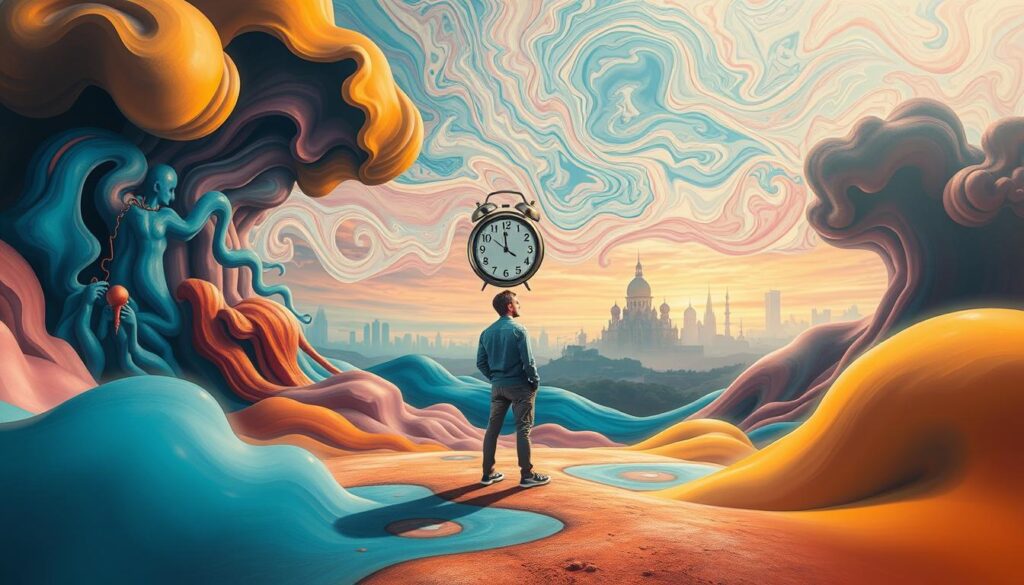
The digital world has its own surrealists. “Meme lords” create viral content that taps into our uncanny side. It’s like the Exquisite Corpse for today’s fast-paced world.
Artists like Beeple and Refik Anadol use AI to create digital dreams. They feed AI cultural data, and it produces art we couldn’t imagine.
Is this homage, pastiche, or something new? It’s a mix of all, but mostly, it’s a new way of exploring our minds. Today’s artists focus on our modern anxieties, not just Freud’s ideas.
The table below shows how the way we create art has changed. The goal remains the same, but the tools have evolved.
| Era | Primary Tool | Key Artist Example | Signature Theme | Output Medium |
|---|---|---|---|---|
| Historical Surrealism | Automatism & Paranoia-Criticism | Salvador Dalí | Dream Logic, Erotic Violence | Oil Painting, Collage |
| Contemporary Analog Art | Installation & Symbolic Mythology | Matthew Barney | Bodily Transformation, Biomorphic Forms | Film, Sculpture, Performance |
| Digital/Algorithmic Art | Generative AI & Internet Culture | Refik Anadol | Data Sublime, Collective Memory | Digital Projection, NFT, Video |
The thread connecting these eras is clear. From Kusama’s dots to surreal memes, the aim is to challenge our rational thinking. The surrealist quest to show the unseen is alive and well, just in new forms.
Major Collections and Their Curatorial Approaches
Looking at the Pompidou, the Dalí Museum, and the Met shows three different ways to show psychological surrealism. Each place has its own style, from colors to label fonts. You might leave feeling like you’ve learned a lot, or even like you’ve been on a journey.
The Centre Pompidou in Paris views surrealism as a serious intellectual topic. It’s all about a clear, step-by-step argument. You see works by Breton, Ernst, and Magritte, each one building on the last. It’s like a history lesson, but it might make surrealism seem a bit too straightforward.
Then, there’s the Salvador Dalí Museum in St. Petersburg, Florida. It’s the opposite of straightforward. It dives deep into Dalí’s world, with dramatic lighting and a building that looks like one of his paintings. It’s like watching a play, where you follow Dalí’s passions and obsessions.
The Metropolitan Museum of Art in New York takes a different route. It shows surrealism alongside other art styles, like Symbolism or modern design. The Met’s curators are great at showing connections between different things. They might put a Miró next to an ancient mask, showing how irrational ideas have always been around.
So, which way is best? Let’s look at the tools they use.
The Labels: The Pompidou’s are all about explaining. The Dalí Museum’s focus on Dalí’s life. The Met’s labels are more like conversations. Each one prepares you differently for the art.
The Lighting: The Pompidou uses bright lights for analysis. The Dalí Museum has dramatic lighting for emotion. The Met’s dim lighting invites you to think deeply. Your feelings about the art are influenced by the lighting.
The Layout: The Pompidou’s straight path suggests a journey. The Dalí Museum’s maze-like layout feels like a dream. The Met’s layout, with art arranged like a conversation, invites you to explore. The way the art is arranged makes a statement.
The best way to show psychological surrealism is to find a balance. It’s about letting the art speak for itself while guiding you. Some museums do it well. Others might explain too much. The best ones make you feel like you’re exploring a world that’s both familiar and strange.
The Art Market: Surrealist Themes in Modern Valuations
How does a canvas of pure psychic automatism, meant to defy logic, become a valuable asset? The market’s love for surrealist art is a cultural puzzle. It shows our collective fears and desires more than our taste in art.
Auction results are more than just numbers. They tell us about our culture. A high price at Christie’s or Sotheby’s shows what we value in our unconscious. The data shows a split in what we find valuable.
The value of surrealist mind imagery falls into two groups. There’s the symbolic paranoia of Magritte or Dalí. Their work is cryptic but understandable—think melting clocks and hidden faces. Then there’s the raw, body-horror art of H.R. Giger or digital surrealists. This art explores the body and nightmares in a visceral way.
Investors are drawn to this art for a thrill without risk. It’s a safe way to rebel. The familiar work is valued for being recognizable and fitting into art history. The more challenging art is like a tech stock—volatile but with a dedicated fan base.
| Theme Category | Exemplary Artists/Styles | Market Perception | Investor Profile | Price Driver |
|---|---|---|---|---|
| Familiar & Symbolic | Magritte, Dalí, early Surrealism | Blue-chip, historically validated | Traditional collector, institutional buyer | Art historical significance, iconic status |
| Biomorphic & Horrific | H.R. Giger, contemporary digital surrealism | Niche, speculative, cult following | Adventurous collector, pop culture investor | Cultural relevance (film, music), subcultural cachet |
| Contemporary Reinterpretation | Artists blending surrealism with social commentary | Emerging, trend-sensitive | Younger collector, speculator | Artist’s market momentum, critical acclaim |
The market for mind imagery shows a strange truth: capitalism can make anything valuable. It turns dreams into financial assets. Yet, we’re drawn to it. In a world full of data, our dreams seem like the last valuable thing. The price tag is our awkward way of saying we’re captivated.
Digital Exhibitions and Virtual Reality Experiences
Virtual reality is set to become the ultimate Surrealist playground. But does it offer a real dream or just a high-resolution simulation? Try it out. The latest way to explore unconscious art isn’t a couch but a VR headset. I’ve tried it, and here’s what I think.
We’ve moved from canvas to code. Instead of looking at a Dalí painting, you can step into its melting world. Places like Dreams of Dali or the Metaverse Museum of Surrealism are more than just views. They are adventures. You become a part of the surreal drama that once only painters could create.
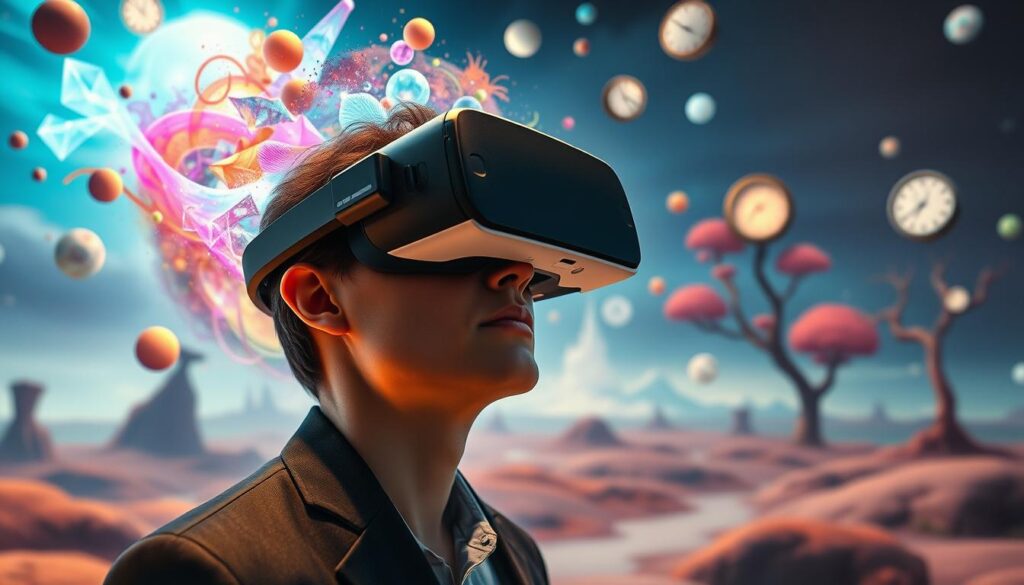
This is like diving into a 4K rabbit hole. The world is endless. You can shrink to be tiny next to a giant lobster phone. Or float through a sea of eyes and clocks. The magic is in how you can change the scene by doing something simple. It’s like working with a ghost.
But let’s slow down the excitement. My wise side is a bit skeptical. For every good thing, there’s a downside hidden in the digital world.
The Pros are tempting:
- Infinite Scale: These worlds are boundless. They grow with your curiosity.
- Deep Interactivity: You don’t just watch the dream. You shape it. It’s like automatic drawing.
- Collective Creation: Imagine a global, digital cadavre exquis. Artists and viewers create surreal worlds together in real-time.
The Cons, though, are tricky:
- The Loss of the Tactile: Where’s the smell of paint? The feel of a brushstroke? The aura Benjamin wrote about is lost in digital space.
- Programmed Spontaneity: Can an algorithm truly be unconscious? Every surprise is from a programmer’s logic. Is it a dream, or a clever script?
- The Gimmick Factor: Too many experiences feel like tech demos. They impress with spectacle but don’t touch your subconscious. It’s like a haunted house, not a deep dive into the mind.
Is this the new way for unconscious art? The answer is a bit of both. VR is amazing for showing surreal worlds. It breaks reality in ways Breton dreamed of.
Yet, it might replace the mystery of intuition with predictable code. The best unconscious art always had something wild and untamable. Can software truly be wild, or is it just pretending?
Walking through a Dalí in VR is unforgettable. But it feels like visiting a movie set, not the artist’s mind. The digital dream is powerful, but it’s often shaped by algorithms focused on keeping you engaged.
The possibilities are huge. But there are also big challenges. This new frontier isn’t just a new way to see Surrealism. It’s a translation. And like all translations, it brings both gains and losses.
Future of Surrealist-Inspired Art and Collecting
Tomorrow’s artists might use computers to tap into our subconscious. The art world is moving online, with digital tools replacing traditional brushes. This raises questions about the future of psychological surrealism and its collectors. Let’s explore what’s coming.
AI image generators are already changing things. They can create images based on what you type. For example, “a melancholy clock melting in a cyberpunk forest” can become a reality. This makes surrealism more accessible, but raises questions about who should get credit.
NFTs of AI-generated art could become valuable. Collectors might see these digital pieces as unique and valuable. The value of these items could come from their concept and uniqueness, not just their beauty.
Themes in surrealism are also changing. It used to focus on personal identity and desires. Now, it explores tech and ecology. Imagine art that uses plants and sensors to show pollution levels or VR that creates a dream world based on your biometrics.
Neurotechnology could also change art. Imagine seeing a brain’s thoughts directly. This could be the pinnacle of surrealism or its downfall. Is it more meaningful to see a brain’s raw thoughts or the artist’s interpretation?
The future of art will blend old and new. Artists will use technology as a tool, not a replacement. Collectors will focus on both physical and digital art. For more insight, look at historical surrealist exhibitions.
Art will be both prosthetic and profound. It will use AI and VR, but the human touch will be key. Machines will create the dream images, but we’ll decide their meaning.
Conclusion: The Eternal Relevance of Surrealist Vision
After exploring from Dalí’s method to virtual reality, what’s left? Surrealism wasn’t just a time; it was a way to see things. It gave us a tool to cut through the surface and find the real, hidden thoughts.
In today’s world of fake images and altered truths, this tool is key. Surrealism helps us see beyond what’s shown. It teaches us to find the truth in the smallest details.
The movement’s strength lies in its challenge to what we think is real. From Magritte’s famous pipe to AI dreams, the question remains. We’re drawn to the mysteries of our own minds. Surrealism just gave us the courage to explore.
Its vision helps us appreciate art, irony, and the mysteries of the unseen. The surrealist way of seeing, once new, is now essential for understanding our world.