
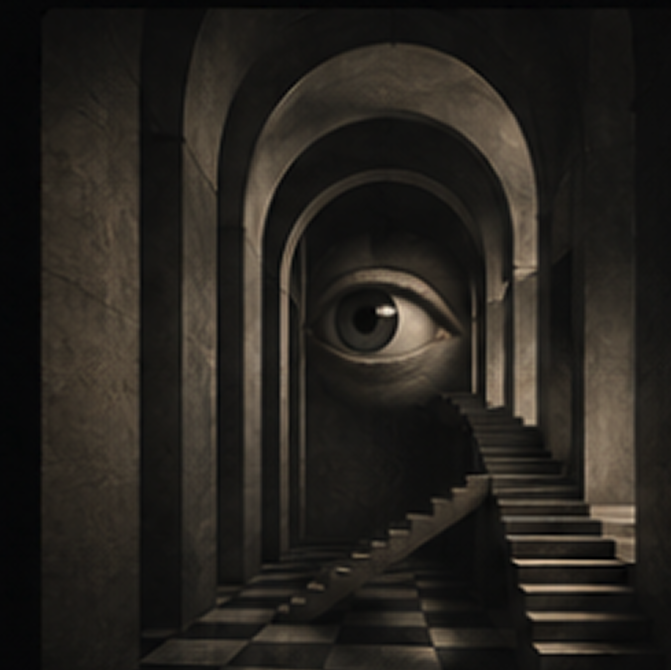
A centenary exhibition can easily turn an art movement into a sealed museum chapter: dates on a wall, famous names in order, masterpieces protected from the unstable energy that made them dangerous in the first place. Dreamworld: Surrealism at 100 does something more useful. Presented at the Philadelphia Museum of Art from November 8, 2025, to February 16, 2026, the exhibition marked the only U.S. venue and final stop of a major international Surrealism centenary project organized with the Centre Pompidou. The museum’s Dreamworld exhibition page framed the show through works by artists including Salvador Dalí, Joan Miró, René Magritte, and many others, while its press materials described approximately 200 works by more than 70 artists across the movement’s international history.
For thesurrealists.org readers, the point is not simply that Surrealism has lasted for 100 years. The stronger argument is that Surrealism still refuses to behave like a finished historical style. It keeps returning whenever reality feels too official, too rational, too violent, too commercial, or too narrow to explain the images people carry inside themselves. Dreamworld matters because it treats Surrealism as a living problem: how do dreams, desire, politics, bodies, machines, myths, and unconscious images keep escaping the categories built to contain them?
Why A Centenary Exhibition Can Be More Than A Memorial
The year 1924 remains the central date in Surrealist history because it marks the publication of André Breton’s Manifesto of Surrealism. A centenary show naturally looks backward from that moment. The danger is that the anniversary becomes ceremonial, turning Surrealism into a monument to its own founding document. Dreamworld avoids that weakness by using the centenary to show how unstable, international, and contested the movement became after Breton’s manifesto entered the world.
The Philadelphia Museum of Art’s Official press release describes the exhibition as a major presentation of Surrealism’s centenary, featuring works that reflect the movement’s many forms across painting, sculpture, photography, film, books, and objects. That breadth matters. Surrealism was never only a painting style. It was a method for disturbing ordinary perception through language, image, chance, dream, desire, and contradiction.
A good centenary exhibition has to do two things at once. It has to give viewers the historical structure: Paris, the manifesto, the postwar trauma, the link to psychoanalysis, the role of journals and exhibitions, the famous names. It also has to protect the movement from becoming too orderly. Surrealism loses force when it is presented as a clean timeline. Its logic is closer to a map of obsessions: the body, the dream, the erotic object, the uncanny room, the animal double, the political rupture, the magical object, the city as a psychic maze.
That is why Dreamworld remains a useful topic even after its Philadelphia run. Its afterlife is not only archival. It asks how museums can present a movement built against ordinary logic without making it safe, flat, or decorative.
How “Dreamworld” Reframes Surrealism As A Global Force
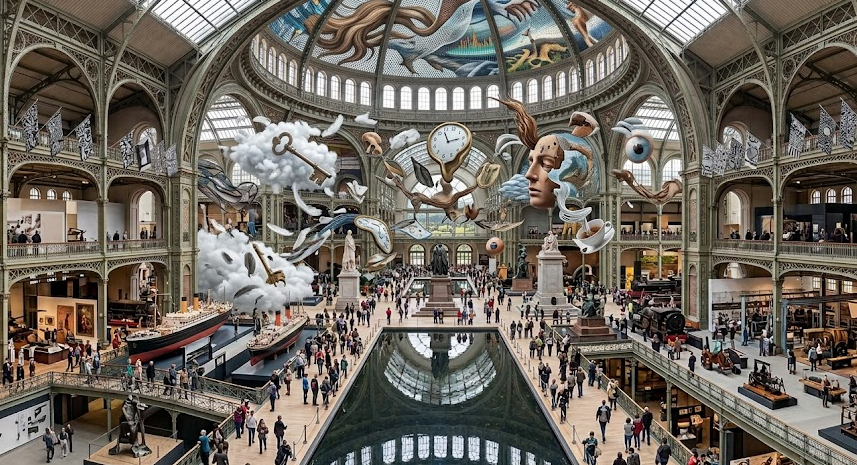
Surrealism began in Europe, but it did not stay there. One of the most important corrections in recent Surrealist scholarship is the recognition that the movement spread through migration, exile, war, translation, colonial histories, and local artistic traditions. A centenary exhibition that focuses only on Paris risks repeating an old story. Dreamworld is more interesting because it belongs to a broader international project that traveled from the Centre Pompidou to several museums before reaching Philadelphia.
The Centre Pompidou described the centenary project as a major exhibition built around the movement founded by Breton’s 1924 Surrealist Manifesto, with a scenography designed like a maze and an emphasis on the movement’s creative force across media and geography. The museum also reported that its Paris presentation attracted more than 550,000 visitors, showing how strongly Surrealism still draws public attention a century later. The Centre Pompidou’s Surrealism centenary exhibition provides the international foundation for understanding why Philadelphia’s version was not just a local museum show.
This global frame matters because Surrealism’s history is full of displacement. Artists moved under pressure from fascism, war, political conflict, and personal rupture. Some carried Surrealist ideas to the Americas. Others transformed them through contact with Mexico, the Caribbean, North Africa, Japan, and other artistic contexts. The movement did not remain pure. It became more complicated, which is why it stayed alive.
That complication fits naturally beside thesurrealists.org’s earlier writing on Surrealism’s global journey, where the movement appears as a network of dream languages rather than a single European style. Dreamworld strengthens that point. Surrealism endured because artists kept remaking it under different historical pressures.
Why The Philadelphia Setting Matters
The Philadelphia Museum of Art is not a neutral stop for a Surrealism centenary. The museum has deep holdings in modern art, including collections connected to Louise and Walter Arensberg and A. E. Gallatin, whose gifts helped make Philadelphia an important American home for European avant-garde work. That gives Dreamworld a particular local meaning. It shows how Surrealism crossed the Atlantic and entered American museum culture long before the centenary.
The Brooklyn Rail’s review noted that the Philadelphia presentation was curated by Matthew Affron and emphasized the clarity with which the exhibition traced Surrealism’s themes and evolving forms. It also noted that as much as a third of the roughly 200 works came from the Philadelphia Museum of Art’s own collections, underlining the museum’s historical depth in modern and Surrealist art.
That institutional history changes the story. Philadelphia was not merely borrowing Surrealism for an anniversary. It was showing how deeply the movement had already entered its own collection, architecture, and public identity. This is important because Surrealism’s U.S. afterlife is often reduced to celebrity names or later pop-culture weirdness. A museum collection reveals a more complex route: patrons, collectors, refugees, curators, archives, exhibitions, and educational programs all shaped how American audiences learned to see the Surreal.
This also makes Dreamworld a useful lens for thinking about the museum itself. Surrealism entered institutions that it once challenged. The same movement that attacked bourgeois reason eventually became a major museum category. That contradiction does not weaken Surrealism. It exposes one of its long-running tensions: can a movement built on psychic revolt survive canonization?
Why Famous Names Are Not Enough To Explain The Movement
A centenary exhibition needs familiar figures. Viewers expect Dalí, Magritte, Miró, Max Ernst, Man Ray, Dorothea Tanning, and Leonora Carrington. Those artists matter, but the strongest Surrealist exhibitions do not treat famous names as endpoints. They use them as entry points into larger questions.
The Philadelphia Museum of Art’s public materials mention names such as Salvador Dalí, Joan Miró, René Magritte, and others as part of the exhibition’s attraction. That helps general audiences enter the show. Yet Surrealism becomes more powerful when those names are placed beside less familiar artists, international networks, books, photographs, objects, and films.
This is especially important for women Surrealists and artists outside the movement’s early Parisian center. For decades, many women connected to Surrealism were described through their relationships to male artists rather than through their own visual systems. Modern centenary exhibitions have helped correct that imbalance by foregrounding artists such as Leonora Carrington, Dorothea Tanning, Dora Maar, Claude Cahun, Remedios Varo, Toyen, and others.
The movement also becomes richer when viewers see Surrealism across materials. A painting of a dream landscape is one form. A strange object, a photogram, a collage novel, a film sequence, or an illustrated publication can be just as central. Surrealism was built through collisions among media. The moment it becomes only a wall of famous paintings, it begins to lose its teeth.
How Surrealism Keeps Escaping The Museum Label
The word “Surrealism” now carries two meanings. In art history, it names a movement tied to specific artists, publications, exhibitions, and political arguments. In everyday language, “surreal” means strange, unbelievable, dreamlike, or absurd. That popular use can dilute the movement, but it also shows how far Surrealist thinking has traveled.
Dreamworld sits between those meanings. It returns viewers to the movement’s historical core while also showing why the term still feels useful in modern life. The reason is simple: Surrealism described a fracture that has not healed. People still experience reality as unstable. Public life still produces absurd spectacles. Technology still creates images that feel half-dreamed. Politics still bends language into irrational shapes. Advertising still turns desire into strange objects. The body still appears in culture as fantasy, commodity, wound, machine, and symbol.
That is why Surrealism refuses to stay historical. Its founding conditions were specific to the aftermath of the First World War, Freudian psychoanalysis, Dada’s anti-art rebellion, and interwar politics. Yet its methods keep returning because modern life continues to generate psychic pressure. Collage, dream logic, automatism, metamorphosis, uncanny objects, and irrational juxtapositions still feel like accurate tools for describing reality.
A centenary exhibition can make that clear if it avoids treating Surrealism as a sealed antique. The movement’s power lies in its ability to look both old and newly relevant. A 1930s object can still feel like it was made for an age of algorithms, brand spectacle, and political unreality because Surrealism always understood that the surface of reality is not trustworthy.
Why “Dreamworld” Works As A Title
The title Dreamworld is effective because it does not reduce Surrealism to dreams alone. It suggests a constructed environment where dreams become public, staged, collected, and interpreted. A dreamworld is not just something a person sees while asleep. It is a whole system of images, fears, wishes, symbols, and contradictions.
That matters for a museum exhibition. Visitors do not enter one artist’s dream. They enter a historical structure made of many dream systems. Dalí’s dreamworld is not Magritte’s. Miró’s is not Carrington’s. Ernst’s is not Cahun’s. Tanning’s is not Man Ray’s. Each artist used Surrealist methods differently, and each turned the irrational toward different ends.
The title also hints at danger. A dreamworld can liberate, but it can also trap. Surrealism opened the unconscious as a creative field, yet it also carried exclusions, conflicts, gendered blind spots, colonial fantasies, and political fractures. A serious exhibition should not pretend that dream imagery is automatically free. Dreams can reveal desire, but they can also repeat power.
This is where the centenary frame becomes valuable. Looking back across 100 years allows viewers to see both the movement’s explosive inventions and its limitations. Surrealism changed modern art, literature, cinema, fashion, design, advertising, and popular culture. It also left unresolved questions about authorship, gender, race, politics, and the museum’s role in preserving revolt.
What The Centenary Reveals About Surrealism’s Future
A century after Breton’s manifesto, Surrealism no longer belongs only to its founders. That is not a loss. It is the condition of its survival. The movement now exists in museums, archives, films, games, fashion editorials, music videos, AI-image debates, contemporary installation art, and online visual culture. Some of those afterlives are thoughtful. Others are shallow. The task for art criticism is to tell the difference.
Dreamworld: Surrealism at 100 helps because it returns the discussion to source material: paintings, objects, photographs, drawings, films, books, and historical context. It reminds viewers that Surrealism was not just “weird art.” It was a disciplined attack on narrow reality, built from dreams, politics, poetry, psychoanalysis, desire, and the refusal to accept the visible world as complete.
That refusal still matters. Current culture is saturated with images, yet many of those images are designed to sell, distract, predict, or flatten experience. Surrealism offers another kind of image: one that interrupts, mutates, and exposes. It teaches viewers to ask why reality has been arranged in a particular way, and what might happen if its hidden logic is made visible.
The centenary does not close the movement. It reopens it. Dreamworld shows that Surrealism remains useful precisely because it is not finished. It keeps changing form whenever artists need a language for psychic pressure, political absurdity, erotic charge, historical trauma, or the strange comedy of modern life.
Why Surrealism Still Refuses To Behave Like History
Surrealism refuses to stay historical because it was never only a historical style. It was a way of doubting reality’s official script. That makes it difficult for museums and useful for audiences. A museum can preserve Surrealist works, but it cannot fully domesticate the questions they ask.
Dreamworld: Surrealism at 100 matters because it turns an anniversary into a live argument. The exhibition looks back to 1924, but it also shows why the movement still feels unresolved in 2026. Its images continue to disturb because the conditions that made them necessary have not disappeared. War, displacement, spectacle, consumer desire, political fantasy, technological unreality, and psychic unease still shape the world viewers bring into the gallery.
That is why the centenary should not be read as a farewell. It is a reminder that Surrealism survives whenever images refuse to behave, whenever objects seem to dream, whenever the body becomes strange, and whenever reality looks too carefully staged to be trusted.
For thesurrealists.org readers, the lesson is clear: Surrealism is not a closed chapter. It is a recurring method for seeing through the surfaces that culture asks people to accept. Dreamworld shows that after 100 years, the movement’s deepest force is still active. It does not simply belong to the past. It keeps returning whenever the present starts to look unreal.