
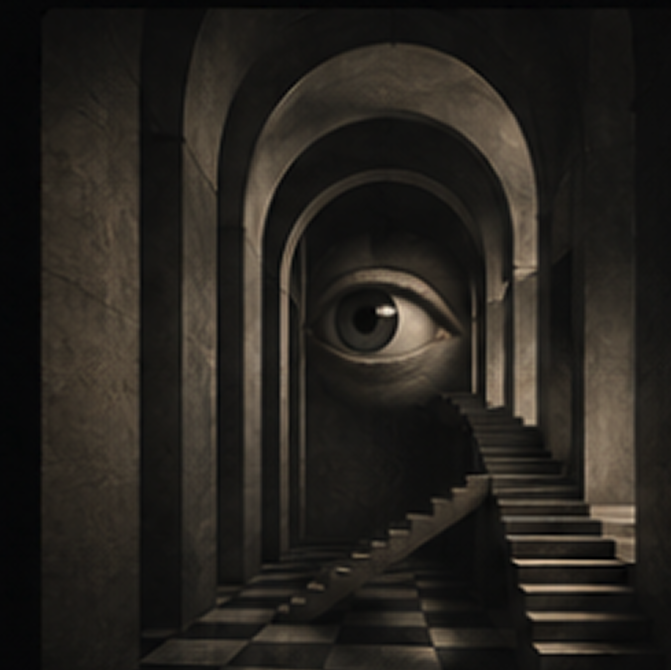
André Breton’s Manifesto of Surrealism gave the movement its most famous theoretical declaration in 1924. It defined Surrealism through psychic automatism, attacked rational restrictions and helped establish Breton as the movement’s central organizer. Yet a manifesto tells us what a movement says it wants to be. A desk can show how that movement was actually lived.
That distinction is becoming unusually visible at the Centre Pompidou-Metz in September 2026. As part of the continuously changing exhibition Dimanche sans fin: Maurizio Cattelan et la collection du Centre Pompidou, the museum is removing the celebrated Breton Wall, which had been shown outside Paris for the first time, and replacing it with a new presentation devoted to “the universe of André Breton.”
According to the Centre Pompidou-Metz’s official exhibition program, the new display draws on works from the Centre Pompidou and the Bibliothèque littéraire Jacques Doucet. More revealingly, the installation will be organized around Breton’s desk.
That curatorial decision sounds modest beside the 255-object wall that has become an icon of Surrealist collecting. It may prove more revealing.
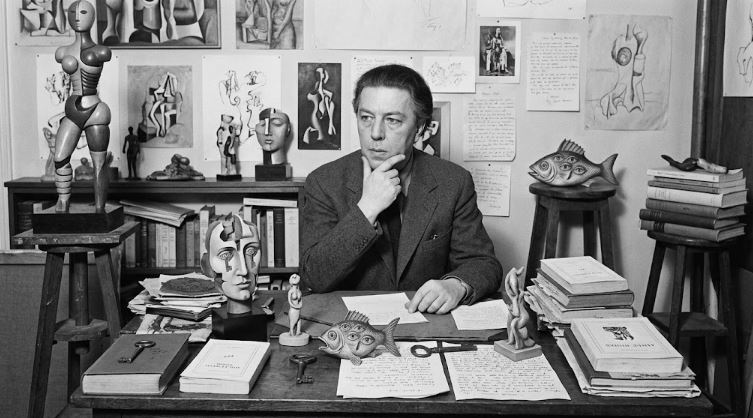
A desk is where Breton wrote, read, corresponded, judged manuscripts, maintained friendships, broke alliances and sat beneath a constantly changing constellation of paintings, masks, stones, roots, photographs and objects. It turns Surrealism from a doctrine into a working environment.
The manifesto explains what Breton declared.
The desk can expose how he thought.
The September 2026 Change Reframes Breton’s Collection
The new presentation arrives during a larger experiment at Centre Pompidou-Metz.
Dimanche sans fin opened on May 8, 2025 as a sprawling dialogue between Maurizio Cattelan and the Centre Pompidou collection. Rather than remain fixed, the exhibition has been designed to change through periodic rotations, substitutions and unexpected encounters.
In a November 2025 press announcement outlining those transformations, the museum revealed that September 2026 would bring a substantial change to its Breton material. The Breton Wall, shown in Metz after decades of close association with Paris, would leave the exhibition. In its place, works from the Centre Pompidou and the Bibliothèque littéraire Jacques Doucet would be arranged around Breton’s desk.
The museum describes the goal as immersing visitors in the world of Surrealism’s founder.
That change shifts attention from one spectacular surface toward the place from which Breton interacted with his collection.
The wall tells us what he chose to keep near him.
The desk adds another dimension: what he did while surrounded by those things.
That difference matters because Breton was never only a writer. He acted simultaneously as poet, editor, critic, collector, correspondent, organizer, gatekeeper and promoter of artists.
A desk brings all those roles together.
The Manifesto Gives Surrealism A Definition
Breton published the first Manifesto of Surrealism in 1924.
Its importance is difficult to overstate.
The text attempted to define a movement whose members were experimenting with automatic writing, dreams, chance, psychoanalysis, poetry and attacks on bourgeois rationality. Breton famously framed Surrealism around psychic automatism, seeking forms of expression that could operate with reduced control from reason and conventional morality.
That theoretical framework still dominates introductions to the movement.
It gives art historians a date.
It provides terminology.
It identifies a declared intellectual ambition.
Yet manifestos are strategic documents.
They simplify.
They announce.
They exclude as much as they explain.
A manifesto presents an argument designed to make a movement legible. Breton’s apartment at 42 rue Fontaine reveals something much less orderly.
There, Surrealism accumulated.
42 Rue Fontaine Became A Mental Laboratory
Breton moved into the Paris apartment at 42 rue Fontaine on January 1, 1922, initially with his first wife, Simone Kahn.
He remained associated with the address until his death in 1966.
The Centre Pompidou now describes the apartment as a kind of Surrealist mental laboratory. That phrase captures what makes the desk so valuable as an interpretive object.
Breton did not merely store art there.
He rearranged relationships between objects.
The apartment contained works by Surrealists and artists Breton considered precursors, alongside Oceanic objects, Indigenous North American works, pre-Columbian pieces, popular artifacts, stones, roots, minerals, butterflies and other natural specimens.
The distinction between masterpiece and found thing weakened.
A painting by Joan Miró could occupy the same intellectual environment as a strangely shaped stone picked up during a walk.
That was not accidental decoration.
It enacted a Surrealist method.
Objects acquired meaning through unexpected proximity.
Their identities became unstable when moved outside the classifications that normally contained them.
Breton’s writing theorized such collisions.
His workspace physically performed them.
The Famous Wall Contained 255 Objects
The best-known surviving fragment of the apartment is the Mur de l’atelier d’André Breton, commonly called the Breton Wall.
The Centre Pompidou collection record dates the ensemble broadly from 1922 to 1966 and records 255 objects and works of art associated with the second room of Breton’s apartment.
The ensemble entered the Musée national d’art moderne through a 2003 dation, an arrangement connected with Breton’s daughter Aube Breton-Elléouët.
Its contents demonstrate how little Breton respected conventional museum hierarchies inside his own home.
Important modern artworks appeared beside ethnographic material.
Natural specimens appeared beside manufactured objects.
Prestigious names coexisted with anonymous makers.
Among works associated with the ensemble are pieces by Pablo Picasso, Francis Picabia, Joan Miró, Alberto Giacometti and Marcel Duchamp.
Yet the wall also included stones, roots, masks and objects whose importance came from Breton’s personal sense of attraction rather than from conventional art-market status.
The wall became a portrait of preference.
The desk may make it a portrait of activity.
Breton Started Collecting Before Surrealism Had A Name
Breton’s passion for objects began before the movement he would later lead.
The Centre Pompidou traces his collection back to 1917, when he purchased a moai kavakava figure from Easter Island using money connected to his baccalaureate.
Breton was approximately twenty-one years old.
Surrealism had not yet been formally declared.
That chronology helps prevent us from treating his collecting as merely an illustration of ideas he later wrote down.
The desire for unusual objects came first.
Theory followed.
Over the following decades, the collection expanded through purchases, gifts, travel, flea markets, exchanges, friendships and chance discoveries.
Breton collected according to attraction.
Objects could matter because they appeared beautiful, disturbing, mysterious, humorous or difficult to classify.
This helps explain one of the great tensions inside Surrealism.
Breton wanted to escape rational classification, yet he became one of the most forceful classifiers of who and what qualified as Surrealist.
His desk places those two instincts beside one another.
The Desk Turns Breton From Author Into Editor
The manifesto encourages us to imagine Breton as a thinker delivering ideas outward.
A desk suggests something more interactive.
Surrealism depended heavily on publications.
Breton edited texts, reviewed submissions, maintained correspondence and helped shape journals that circulated the movement’s ideas internationally.
Letters crossed his desk.
Manuscripts arrived.
Invitations went out.
Arguments continued through paper.
Artists sought approval or resisted it.
Political positions were debated.
Relationships fractured.
A movement that celebrated unconscious freedom was also sustained through considerable organization.
This is one reason the Bibliothèque littéraire Jacques Doucet material matters to the new display.
Surrealism’s mythology often emphasizes dreams, chance encounters and automatic writing.
Its practical history also depends on archives.
Someone typed.
Someone mailed.
Someone edited.
Someone kept records.
Breton’s desk brings administration back into the story of revolution.
Objects Were Not Passive Decorations For Breton
For Breton, objects could behave almost like provocations.
He was fascinated by things that generated surprise or resisted ordinary usefulness. Surrealist culture transformed flea-market discoveries, obsolete mechanisms, mannequins and displaced domestic objects into triggers for new associations.
His collection embodied that attitude.
The Centre Pompidou explains that Breton surrounded himself with things capable of producing surprise and interrogation. The collection was guided by his attraction to the powers he believed certain objects could acquire over the imagination.
This is where the desk may say more than the manifesto.
A theoretical statement can tell readers that Surrealism seeks unexpected association.
Breton’s working space shows what unexpected association looked like when maintained for decades.
The objects changed position.
New works arrived.
Others disappeared.
The environment remained provisional.
Surrealism was not hanging on the wall as a completed doctrine.
It was continually being edited.
The Wall Was Never As Fixed As Museums Make It Look
Museum displays encourage permanence.
Breton’s studio was not permanent.
Historical photographs show arrangements changing over time as Breton obtained new objects, exchanged works or sold pieces. The famous wall became a slow-moving composition that developed across several decades.
That mobility is significant.
The wall now exists as an institutional object with an inventory number.
In the apartment, it was closer to an evolving montage.
Breton himself created connections through placement.
A pre-Columbian object might sit near a modern painting.
A stone might acquire new significance through proximity to sculpture.
A natural form could appear as strange as something invented by an artist.
The studio therefore operated like a three-dimensional collage.
The desk sat inside that collage.
From there Breton could look outward and repeatedly reconstruct the environment in which he worked.
That makes the desk less a piece of furniture than a viewing position.
Elisa Breton Complicates The Myth Of The Solitary Collector
The new attention to Breton’s physical environment also exposes something that older histories often minimized: he did not build that environment alone.
Research into correspondence between Breton and his third wife, Elisa Breton, has revealed her substantial role in the collection.
The couple met in New York in December 1943, during Breton’s wartime exile in the United States. They returned to France in spring 1946 and lived at 42 rue Fontaine.
Centre Pompidou research shows that Elisa actively contributed to the collection through travel, acquisitions and research. The museum’s account of Elisa Breton’s role in the Breton Wall describes correspondence in which André asked her to look for artworks, documents and unusual objects during trips.
In 1954, for example, Elisa helped negotiate the acquisition of watercolors by Symbolist artist Charles Filiger.
She also collected documentation useful to Breton’s research on magical art and remained an artist in her own right, producing photographs and Surrealist boxes.
This changes the image of Breton at his desk.
He was central.
He was not solitary.
The collection surrounding him depended on other people’s labor, movement, friendship and judgment.
The Desk Can Expose Surrealism’s Contradictions
Breton’s apartment is seductive because it appears to embody the movement’s dream of escaping ordinary categories.
Its beauty should not erase its contradictions.
The collection included Indigenous and non-European cultural objects acquired during a period shaped by colonial collecting structures. Breton and other Surrealists condemned colonialism, yet they also participated in markets through which such material circulated.
Centre Pompidou researchers have addressed this tension directly.
Breton’s enthusiasm for Oceanic, Indigenous North American and pre-Columbian arts helped challenge European assumptions about what deserved aesthetic attention. At the same time, admiration did not dissolve the unequal systems through which objects moved.
A desk-centered installation can make these questions harder to avoid.
Who sent Breton objects?
Who sold them?
Who originally made them?
What meanings did they possess before entering his private arrangement?
What happened when Breton’s personal attraction became part of the historical canon of Surrealism?
These questions do not invalidate his collection.
They make it historically legible.
A Desk Also Reveals The Power Breton Exercised Over Other Artists
Breton promoted artistic freedom while exercising significant authority over the movement.
That tension belongs near any discussion of his workspace.
He championed artists.
He wrote prefaces.
He organized exhibitions.
He developed friendships across several continents.
He also expelled, criticized or distanced himself from people whose political, personal or artistic positions no longer aligned with his conception of Surrealism.
The desk was therefore a place from which reputations could be strengthened or weakened.
That institutional power is harder to see in the manifesto.
A manifesto speaks collectively even when written by a particular person.
A desk reminds us that movements are administered by individuals.
Breton’s position as Surrealism’s principal theorist gave him extraordinary influence over how the movement described itself.
It did not give him complete control over what Surrealism became.
Artists such as Leonora Carrington, Remedios Varo, Claude Cahun, Toyen, Wifredo Lam, Méret Oppenheim and Man Ray repeatedly expanded the movement beyond any single definition.
For readers interested in how one of those artists used a technical process to destabilize ordinary vision, thesurrealists.org’s discussion of Man Ray’s photographic innovations offers a useful parallel.
Breton could write the definition.
Artists kept testing its boundaries.
His Desk Sat Beneath A Global Network
The studio also makes Surrealism’s geography visible.
Breton visited Mexico in 1938.
During wartime exile in North America, he traveled through the United States and later visited Hopi and Zuni territories with Elisa.
His collection increasingly contained objects associated with regions far from Paris.
Correspondence connected 42 rue Fontaine with artists, writers and collectors across Europe and the Americas.
By the postwar decades, Surrealism could no longer be contained within the geography of its 1924 manifesto.
The desk stood in Paris.
The network did not.
That is another reason a material reconstruction can correct a text-centered history.
Documents and objects show circulation.
They reveal how ideas entered Breton’s environment from elsewhere before being reorganized within his Surrealist worldview.
Paris remained a major node.
It was never the whole system.
The Desk Makes Chance Look More Organized
Surrealism loved chance.
Breton celebrated unexpected encounters and objects discovered without deliberate searching.
Yet his apartment reveals how carefully chance could be preserved once it occurred.
A found stone might be mounted.
A strange object might receive a particular place.
A photograph might be saved.
A chance encounter could become the foundation for a poem, essay or relationship.
The unexpected did not remain random.
Breton curated it.
This is one of the most revealing aspects of the desk metaphor.
His Surrealism depended on creating conditions where surprise could happen, then recognizing, collecting and framing the surprise afterward.
That is not pure automatism.
It is selection.
The difference helps explain why Breton’s influence lasted so long. He was not merely receptive to irrationality. He was exceptionally skilled at turning irrational encounters into narratives, publications, exhibitions and historical structures.
The desk is where marvel became method.
The 2026 Installation May Make Breton Feel Less Monumental
There is an irony in replacing the monumental Breton Wall with a desk.
The wall encourages awe.
Hundreds of objects create a dense visual field that can overwhelm individual histories.
A desk brings scale back toward the human body.
Someone sat there.
Someone opened letters there.
Someone changed his mind there.
Someone chose which objects deserved attention.
Someone decided what to publish.
A desk makes Surrealism look less like an abstract historical force and more like a sequence of decisions.
That may be especially productive inside Dimanche sans fin, an exhibition built around continual rearrangement.
The Centre Pompidou-Metz exhibition runs into January 2027, and its changing design deliberately resists the idea that a museum display must remain frozen.
Breton would likely have understood the appeal.
His own wall was never truly fixed either.
Why The Desk May Matter More Than The Manifesto
The claim does not require diminishing the importance of the Manifesto of Surrealism.
Without Breton’s 1924 text, the movement would be harder to define historically.
The manifesto gives us terminology.
The desk gives us behavior.
The manifesto describes automatism.
The desk shows editing.
The manifesto attacks rational hierarchy.
The desk sits beneath a personally constructed hierarchy of desired objects.
The manifesto imagines psychic freedom.
The desk belonged to a man who exercised enormous institutional authority.
The manifesto belongs to Paris in 1924.
The objects surrounding the desk lead toward Mexico, Oceania, Indigenous North America, flea markets, friendships, travel, colonial histories and postwar artistic networks.
That is why the Centre Pompidou-Metz’s September 2026 rearrangement is more than a display change.
It shifts the central question.
Instead of asking only “What did André Breton believe Surrealism was?”, visitors can ask “How did Breton make Surrealism operate every day?”
The second question may produce a stranger answer.
At 42 rue Fontaine, Surrealism was not merely a philosophy of dreams. It was correspondence waiting to be answered, art waiting to be repositioned, stones waiting to be recognized, friendships being maintained, exclusions being made and objects from distant cultures being pulled into new systems of meaning.
The manifesto made Surrealism legible.
The desk makes it human, material and contradictory.
That may tell us more.