
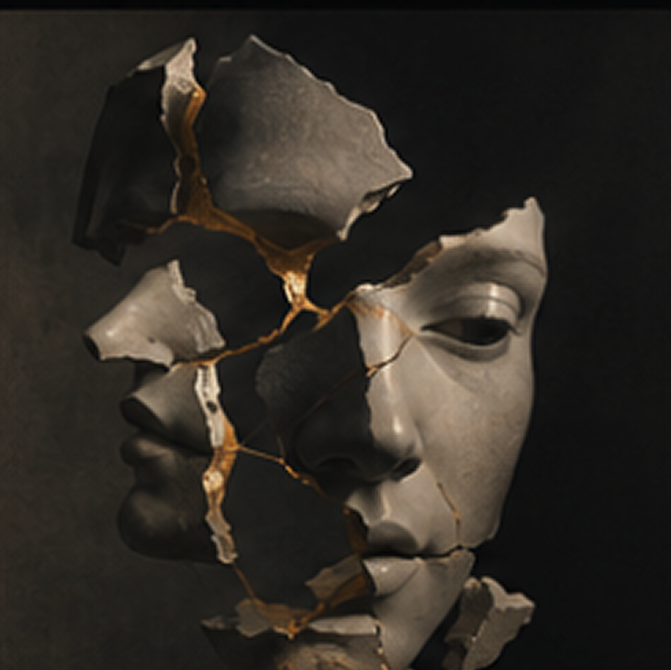
Surrealism was a groundbreaking art movement, often seen through a male lens. It allowed men to express hidden desires, often using women as symbols. Yet, the contributions of female artists are often ignored.
Women in surrealism faced many obstacles. They needed connections with famous men to get into the art world. Leonora Carrington, for example, used her relationship with Max Ernst to enter the surrealist circle. She did this while being aware of the sexism around her.
Carrington’s work shows her life and her views on gender. Her involvement in feminism in the 1970s shows her dedication to change. This introduction prepares us to see how women surrealists changed the movement, adding their own views to its story.
Key Female Artists and Their Contributions
Women have been key in the surrealist movement, shaping its story and pushing its limits. Leonora Carrington is a standout figure. She used surrealist ideas to explore non-masculine queerness. Her work moved away from Freud, embracing Jungian psychology.
This change let her show a more fluid view of gender and self. Her paintings mix alchemy, hybrid bodies, and divine figures. They show a unique blend of personal and cultural symbols.
Carrington was fascinated by Celtic folklore and witchcraft. She used these to turn the “hysteric witch” into a symbol of feminine power. This shows her creative take on art.
Other female artists in surrealism also made significant contributions. They challenged the male gaze and dreamed of utopic matriarchal societies. Their art celebrates and empowers femininity.
To learn more about these artists, check out this resource. It dives into the roles of women in art and their lasting impact on surrealism.
Overcoming Challenges in a Male-Dominated Field
In a world mostly seen through male eyes, female surrealists faced big obstacles. The surrealist movement often saw women as just muses or objects of desire. This narrow view greatly affected how women artists were seen and valued in the art world.
Many male surrealists saw women as the “Woman-Child,” a symbol of innocence and purity. This idea made women seem limited to certain feminine traits, hiding their artistic talents. So, the work of female surrealists was often ignored or not recognized.
Getting into the surrealist circle often meant having a personal connection with a male artist. This made women’s bodies seem like currency, valued more for their looks than their minds or art.
Leonora Carrington’s work stands out against this sexism. Unlike men who used violent and objectifying collage, Carrington showed a different way. Her art, with its smooth transitions between humans and animals, shows her understanding of gender and identity as a range, not just two sides. This challenges the usual views of women in surrealism and shows the strength of female surrealists in making their own art.
By facing these challenges, we see the creativity and determination of female surrealists in a field that often ignored them. Their work, though often hidden, has deeply influenced the surrealist movement. It continues to inspire artists today.
Analysis of Iconic Works
Looking at Carrington’s art shows how important women were in surrealism. Her work tells her story and questions old norms. Each piece is a space for feminist and queer ideas.
The Garden of Paracelsus (c. 1957) shows Carrington’s take on alchemy and being both male and female. It’s full of symbols like unicorns and eggs, showing a feminine side. This makes her work different from what men did back then.
The Return of Boadicea (c. 1969) is about fighting against men and for women. The Celtic queen Boadicea rides a chariot, showing women can be strong. This piece is about women winning against men.
In The Giantess (the Guardian of the Egg) (c. 1947), Carrington shows a strong woman holding an egg. The egg means fertility and power. The art around her shows a world where women are in charge.
Down Below (c. 1940) talks about how men and women are not really different. It shows strange, mixed-up bodies and empty masks. This art says that being a woman is just pretending, which is a deep thought on who we are.
Carrington’s art shows women’s role in surrealism and challenges the men who led it. Her work is a reminder of the depth and variety of women’s views in surrealism. For more on this, read this article.
Enduring Influence and Legacy
The impact of female surrealists is felt in today’s art world. Leonora Carrington’s vision challenged old gender norms. She paved the way for future women artists.
Her work on androgyny and femininity changed how we see gender. This shift helped artists explore identity and body freely. It’s key to understanding their role in feminism.
Today, artists are inspired by these pioneers. Digital platforms have brought back interest in their work. They’re reimagining surrealism’s bold ideas.
For those interested in women in art, these surrealists’ stories are inspiring. They show how art has evolved on gender and representation. To learn more, visit this insightful resource.