
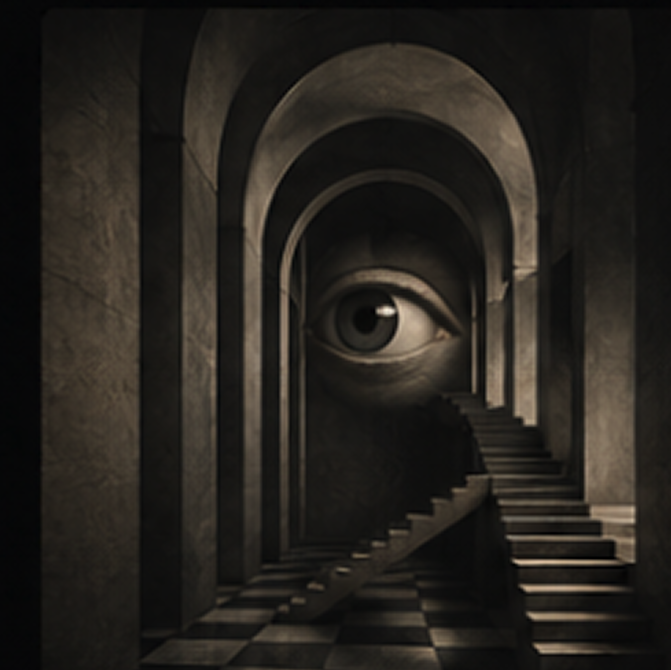
Frida Kahlo has spent decades occupying an uncomfortable place in the history of Surrealism.
André Breton saw a Surrealist.
Kahlo resisted the label.
Museums still place her inside Surrealist exhibitions.
Her paintings still appear beside works by Leonora Carrington, Remedios Varo, Salvador Dalí, Max Ernst, and other artists associated with the movement.
Yet describing Kahlo simply as a Surrealist can obscure as much as it explains.
That tension feels especially relevant during Frida: The Making of an Icon at Tate Modern in London, running from June 25, 2026, through January 3, 2027.
The Tate Modern exhibition presents more than 30 works by Kahlo alongside over 200 works by her contemporaries and later artists, then examines the enormous cultural afterlife that turned her face into one of the most recognizable artistic images in the world.
The exhibition is not primarily a Surrealism show.
That may be exactly why it provides such a useful moment to reconsider the label.
Kahlo’s relationship with Surrealism was real.
It was also complicated, externally promoted, strategically useful, and never large enough to contain her.
André Breton Arrived In Mexico And Saw A Surrealist
The crucial encounter occurred in 1938.
André Breton traveled to Mexico with his wife, artist Jacqueline Lamba, initially intending to meet the exiled revolutionary Leon Trotsky.
He also encountered Kahlo’s paintings.
The Museo Frida Kahlo chronology records that Breton saw similarities between Kahlo’s work and Surrealism and offered to promote her internationally.
For Breton, the connection made sense.
Kahlo’s paintings contain doubled bodies, floating objects, exposed anatomy, symbolic animals, strange vegetation, impossible spaces, blood, wounds, dreamlike landscapes, and abrupt shifts between physical reality and psychological symbolism.
To the leader of a movement committed to breaking rational boundaries, the attraction was obvious.
But Breton’s interpretation created a problem that has never completely disappeared.
He was fitting Kahlo into a European category.
Kahlo was describing something much more personal.
Kahlo Rejected The Label Without Escaping It
Kahlo did not simply accept Breton’s classification.
The official Museo Frida Kahlo biography notes that she rejected the term Surrealist, even though literature relating to the movement could be found among the books near her bed.
That detail captures the ambiguity perfectly.
She was not ignorant of Surrealism.
She was not culturally isolated from it.
She knew its artists and ideas.
She simply resisted having her work explained by them.
Kahlo repeatedly insisted that her painting grew from her own experience.
Physical pain.
Marriage.
Sexuality.
Political conviction.
Mexican identity.
Pregnancy and reproductive loss.
Family history.
Illness.
Her paintings may look impossible, but the emotional circumstances behind them were often painfully concrete.
That difference is central.
A dream image can emerge from an attempt to access the unconscious.
Kahlo’s impossible images frequently emerge from trying to make lived experience visible.
The Two Fridas Looks Surreal But Begins With Biography
The Two Fridas (1939) offers a perfect example.
Two versions of Kahlo sit beside one another.
Their exposed hearts connect through a blood vessel.
One wears European-style clothing.
The other wears Tehuana dress.
Blood drips onto fabric.
The scene is anatomically impossible.
Its space feels theatrical.
Nothing about it obeys ordinary realism.
A Surrealist interpretation seems almost unavoidable.
Yet the painting was created during the emotional crisis surrounding Kahlo’s divorce from Diego Rivera in 1939.
The doubled self can therefore be read through personal fracture, cultural identity, emotional dependency, and the instability of selfhood.
The imagery resembles Surrealism.
Its source is not necessarily Surrealist theory.
That distinction is what keeps the label unstable.
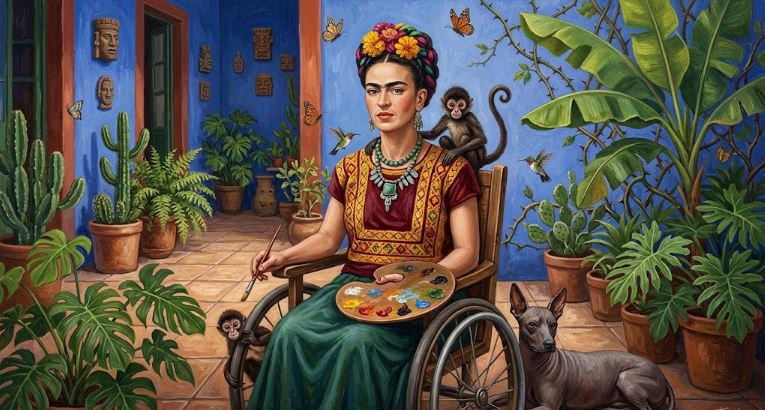
Pain Made Her Body Stranger Than A Dream
Kahlo’s fascination with the fragmented body also emerged from unusually direct experience.
In 1925, when she was 18, a bus accident caused catastrophic injuries.
Medical treatments, operations, periods of confinement, corsets, and chronic physical problems became recurring parts of her life.
Her paintings repeatedly turn the body into an exposed structure.
Spines break.
Hearts become visible.
Blood vessels connect separate selves.
Medical devices enter compositions.
Bodies appear pierced, opened, divided, supported, or immobilized.
These images certainly overlap with Surrealism’s fascination with bodily transformation.
But Kahlo’s body was not an abstract laboratory for psychological experimentation.
It was the body she inhabited.
This makes paintings such as The Broken Column (1944) difficult to reduce to dream imagery.
The impossible anatomy tells a physical truth.
Mexico Complicates The European Label
Breton’s enthusiasm for Kahlo also belonged to a larger Surrealist fascination with Mexico.
He famously regarded the country as uniquely receptive to Surrealist possibility.
But that enthusiasm could blur major distinctions.
Mexican Indigenous traditions, Catholic imagery, popular devotional painting, pre-Columbian objects, revolutionary politics, folk practices, and local attitudes toward death had histories that did not need European Surrealism to make them strange or significant.
Kahlo drew deeply from Mexican visual culture.
Her clothing mattered.
Plants mattered.
Animals mattered.
Religious formats mattered.
National politics mattered.
Her paintings combine those sources with modern portraiture and intensely private symbolism.
Calling every unexpected combination “Surrealist” risks turning Mexico into scenery for a European theory.
Kahlo’s resistance to the label can therefore be understood partly as resistance to that simplification.
Breton Still Helped Internationalize Her Career
Rejecting the label did not make Breton irrelevant.
His advocacy mattered.
Kahlo held an important exhibition at Julien Levy Gallery in New York in 1938, where Breton helped frame her work for an international avant-garde audience.
Then came Paris.
At Breton’s invitation, Kahlo traveled there in 1939.
The trip did not unfold smoothly.
The Museo Frida Kahlo records that Marcel Duchamp helped make her participation in the Mexique exhibition at Galerie Renou et Colle possible.
The exhibition opened on March 10, 1939.
A work by Kahlo, The Frame (1938), was subsequently purchased by the French government and today belongs to the Centre Pompidou collection.
The episode demonstrates why the Surrealist connection cannot simply be discarded.
Breton’s network helped move Kahlo into European modernist circulation.
The label may have been imperfect.
It also opened doors.
Marcel Duchamp Fit Kahlo Better Than Bretonian Orthodoxy
Kahlo reportedly found Duchamp easier to deal with than many members of Breton’s Paris circle.
That difference is revealing.
Duchamp had always maintained an unusual relationship with movements.
He could work near Dada and Surrealism without allowing either to become a complete identity.
Kahlo’s position was similarly independent.
She could participate in Surrealist exhibitions without turning herself into a doctrinal Surrealist.
She could know Breton while disagreeing with his interpretation.
She could enter European avant-garde networks while maintaining an artistic language grounded in Mexico and autobiography.
Membership did not have to mean obedience.
The 1940 International Exhibition Keeps The Question Alive
Kahlo’s association with Surrealism continued after Paris.
In 1940, she participated in the International Exhibition of Surrealism in Mexico City, organized at the Galería de Arte Mexicano.
Her presence there is important.
If Kahlo had absolutely nothing to do with Surrealism, the historical argument would be simple.
But she repeatedly entered its exhibition networks.
Her work genuinely shared some of its concerns.
She explored unstable identity.
Ordinary objects accumulated symbolic force.
Bodies transformed.
Logical space collapsed.
Inner and outer realities became difficult to separate.
The disagreement lies not in whether Surrealist affinities exist.
They clearly do.
The question is whether those affinities should define her.
Self-Portraiture Makes Her Surrealism Different
Kahlo painted herself constantly.
That repetition distinguishes her from many canonical Surrealists.
She was not simply inventing imaginary beings.
She repeatedly returned to the same face.
The face could then change context.
Surrounded by animals.
Split into doubles.
Placed against foliage.
Combined with political symbols.
Rendered with cropped hair.
Connected to visible organs.
The self became an experimental site.
That approach makes her surprisingly contemporary.
Identity is presented not as one stable truth but as something performed through clothing, gender presentation, politics, relationships, cultural affiliation, bodily condition, and self-image.
Surrealism helps illuminate that instability.
It does not explain all of it.
Carrington And Varo Show Why “Mexican Surrealism” Needs Precision
Kahlo is frequently discussed alongside Leonora Carrington and Remedios Varo, particularly when the conversation turns toward Surrealism in Mexico.
The comparison is useful only if their differences remain visible.
Carrington arrived in Mexico after European exile.
Varo arrived after fleeing war and persecution.
Both had direct histories inside European Surrealist networks before producing much of their mature work in Mexico.
Kahlo’s trajectory was different.
She was born in Mexico.
Her relationship with Breton came after her visual language had already begun developing.
Readers interested in that distinction can explore thesurrealists.org’s verified article on Remedios Varo’s science, magic, and enigmatic worlds.
Placing Kahlo and Varo together can reveal how differently Surrealism operated inside the same cultural environment.
It should not erase those differences.
Tate Shows What Happened After The Label
The 2026 Tate Modern exhibition expands the issue in another direction.
Frida: The Making of an Icon examines not only Kahlo’s paintings but also what happened to her image after her death in 1954.
Tate describes it as the first major exhibition focused specifically on how Kahlo became a global icon.
More than 30 works by Kahlo appear alongside over 200 works by contemporaries and artists influenced by her.
The exhibition then turns toward “Fridamania”, bringing together more than 200 commercial objects using her art, appearance, style, or persona.
The scale of that cultural transformation is extraordinary.
It also makes the Surrealist debate feel almost modest.
Kahlo has become larger than practically every category once used to describe her.
The Label Persists Because It Is Both Wrong And Useful
Calling Frida Kahlo a Surrealist is not entirely wrong.
Calling her simply a Surrealist is.
That contradiction explains why the argument survives.
Surrealism helps us recognize her impossible anatomies, symbolic collisions, doubled identities, psychologically charged objects, and transformations of reality.
It also connects her historically to Breton, Duchamp, the 1939 Paris exhibition, and the 1940 International Exhibition of Surrealism in Mexico.
But the label becomes restrictive when it implies that Breton discovered the true meaning of Kahlo’s work.
He did not.
He recognized something in it that aligned with his movement.
Kahlo recognized something else.
She saw lived reality transformed by painting.
Frida Kahlo Never Needed The Argument To Be Settled
Frida: The Making of an Icon remains at Tate Modern through January 3, 2027.
Its emphasis on Kahlo’s many identities offers a useful corrective to any single-label interpretation.
Wife.
Communist.
Mexican modernist.
Disabled artist.
Self-portraitist.
Fashion icon.
Political figure.
Global celebrity.
Feminist symbol.
Queer icon.
And, depending on who is doing the labeling, Surrealist.
None completely contains her.
That may be why the Surrealist question refuses to disappear.
Breton’s label was influential enough to change how the international art world encountered Kahlo.
Her resistance was strong enough to prevent that label from becoming the final word.
Nearly nine decades after their 1938 encounter, the disagreement still matters.
Not because art history urgently needs to decide whether Frida Kahlo was or was not a Surrealist.
It matters because her work demonstrates something more interesting.
An artist can enter a movement’s history without ever belonging completely to its definition.