
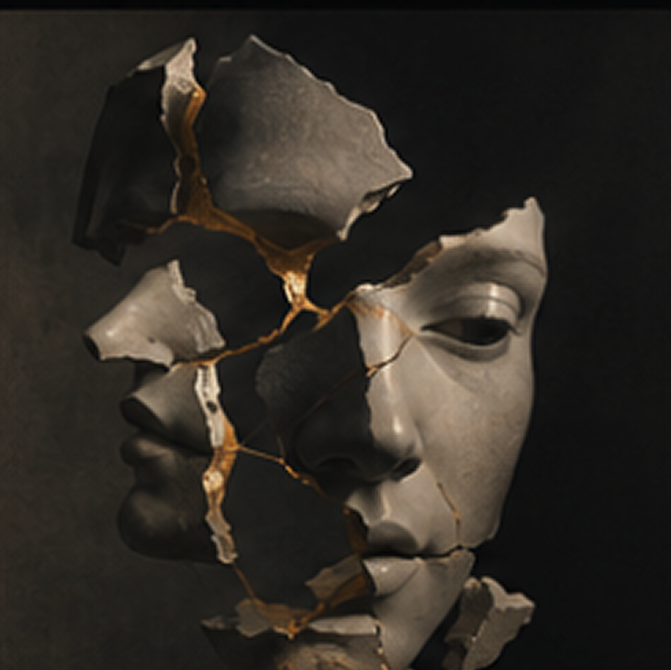
Pop surrealism, also known as Lowbrow Art, started in the late 1960s. It captures the spirit of commercial images and street life. This movement, born in Los Angeles, mixes underground comix, tiki culture, hot-rod art, and tattooing.
It’s hard to pin down, but its unique visual language speaks to many people. Pioneers like Robert Williams and Gary Panter helped shape this art form. They proudly called it “lowbrow,” turning a once-negative term into a symbol of pride.
This change helped break down old art barriers. The world has changed, with memes becoming a big part of our lives. The documentary “Meme Gods,” starring Cedric The Entertainer, shows how pop surrealism’s DNA is now in internet culture.
This section will dive into the movement’s impact. We’ll look at its humor and cultural references. It’s become a key player in today’s art scene.
Advertising and Branding Dream Shock Tactics That Sell and Ethics Debates
In today’s world, surreal images are used more in ads to grab people’s attention. Brands use this to break away from usual marketing. They make ads that really speak to people by using pop surrealism.
The “dream shock” tactic uses shocking, dream-like images to get past what people normally think. This grabs viewers’ attention, making them open to brand messages. Ads with weird characters and impossible scenes come from pop surrealism, making them stand out.
Brands see the cool factor of pop surrealism and use it to seem real. But, this raises big questions about ethics. Is using counterculture images in ads watering down its meaning? Or does it help make surrealism more accessible?
Studies show big ads with surreal images can go viral. But, people get upset if they feel these ads are fake or just trying to make money. This shows the tricky spot brands are in when using surrealism.
The big debate is about the line between art and ads. The visuals that once questioned consumer culture are now speeding it up. Business folks need to understand why these ads work but also watch out for the risks to their image.
To learn more about surrealism in ads, check out this in-depth look.
Comics, Toys, and Street Art Pipelines from Galleries to Mass Culture
Lowbrow art has grown from small circles to a big part of popular culture. It has traveled through three main paths: comic books, designer toys, and street art. Each of these has helped turn underground art into something everyone knows.
Lowbrow art was inspired by many places, like underground comix and tiki culture. It also drew from hot-rod art, street art, and tattoos. These all share a spirit of rebellion that people love.
Comic books from the 1960s and 1970s were key to lowbrow art. Artists who worked outside the Comics Code Authority created a unique look. They used zines and independent networks to connect directly with fans, skipping traditional art channels.
The designer toy scene started in the 1990s and 2000s. KAWS and Kidrobot were at the forefront. They made art that was once only in galleries into something anyone could buy.
Street art has also changed a lot. It went from being illegal to being part of big mural festivals and galleries. This shows how pop surrealist art has become a big part of city life.
Comics, toys, and street art are both creative outlets and ways to share art with many people. But, there are challenges when art made for underground scenes is sold as fine art. This makes people wonder about the true value of the art and its connection to its roots.
Gaming and Concept Art World Building Through Dream Logic
In video games, pop surrealist principles have changed how worlds are made. Surrealism lets artists dive into the unknown. It brings dreams to life, stirring emotions and drawing people in.
Pop surrealism mixes dreamlike qualities with today’s chaos. This makes games more engaging and beautiful.
Game makers use surreal dream logic to create worlds that break rules. These places have changing characters and feelings that react to players. It’s different from stories that just follow a line.
This way, players feel more connected to the game. It’s a personal experience that stays with them.
Games like classic point-and-click adventures show how pop surrealism works. They used weird perspectives and characters to pull players into their worlds. Today’s open-world games do the same, making stories and feelings more real.
Concept artists in gaming look to pop surrealist painters for inspiration. They turn two-dimensional dreams into real spaces for players to explore. This makes games more than just something to look at; they’re something to do.
The gaming world is huge, bigger than movies and music. Pop surrealism’s visual style is everywhere in games. Even if players don’t know the term, they feel its impact.
Knowing about game design is key for business pros. It affects how players feel and stay involved. Using pop surrealism makes games memorable and unique.
| Game Title | Surrealist Elements | Player Engagement |
|---|---|---|
| Grim Fandango | Grotesque characters, distorted perspectives | High, due to immersive storytelling |
| Journey | Emotionally responsive environments | Very high, encourages exploration |
| Inside | Dark, surreal landscapes | High, creates a sense of mystery |
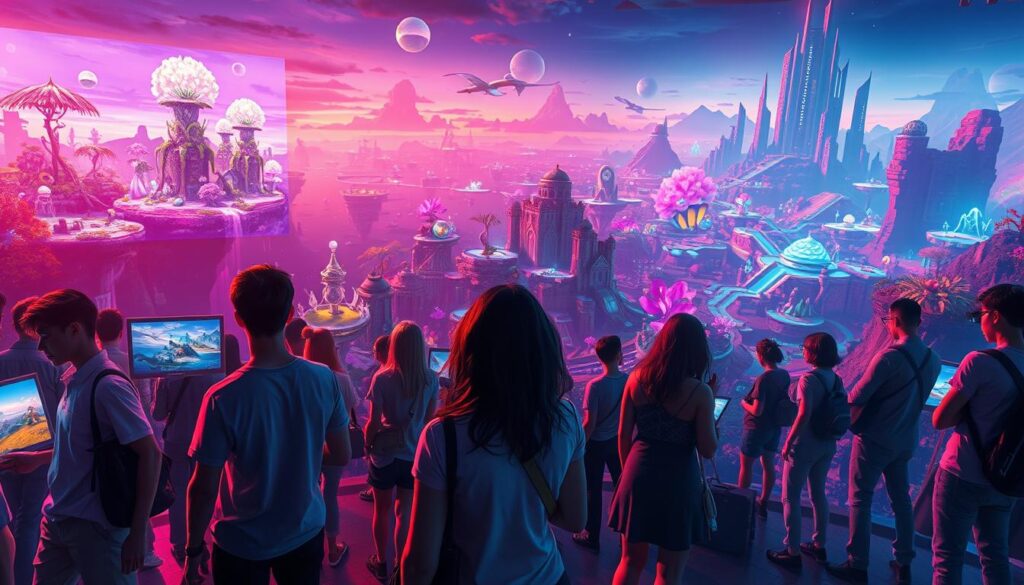
In conclusion, gaming and pop surrealism are closely linked. This connection opens up new possibilities for games. It promises exciting times for both players and creators.
For more on art and gaming, check out the symbolism in surrealist art.
Music Videos, Album Art, and Stagecraft as Surreal Theater
The music industry is a big stage for pop surrealism. It brings whimsical art to life through music videos, album art, and live shows. Artists use the absurd and fantastical to connect avant-garde art with everyone.
Album covers have turned record stores into art galleries. The psychedelic art of the 1960s drew people into a colorful world. Artists like Robert Williams made album art and became known in the art world too. This shows how music helps pop surrealist artists reach more people.
Music videos are perfect for pop surrealism stories. They use striking images to tell brief, emotional tales. Directors from the MTV era were inspired by surrealist painters, blending dreams with music. This mix makes surrealist art part of our daily lives.
Today’s concerts use big surrealist images and dream-like sets. These shows turn performances into interactive art. This way, the music industry and pop surrealism work together well.
| Element | Impact on Audience | Examples |
|---|---|---|
| Album Art | Transforms perception of music | Robert Williams’ covers |
| Music Videos | Enhances emotional connection | MTV-era surreal visuals |
| Stagecraft | Creates immersive experiences | Inflatable characters, dream-logic |
Museum Responses Institutional Embraces and Controversies
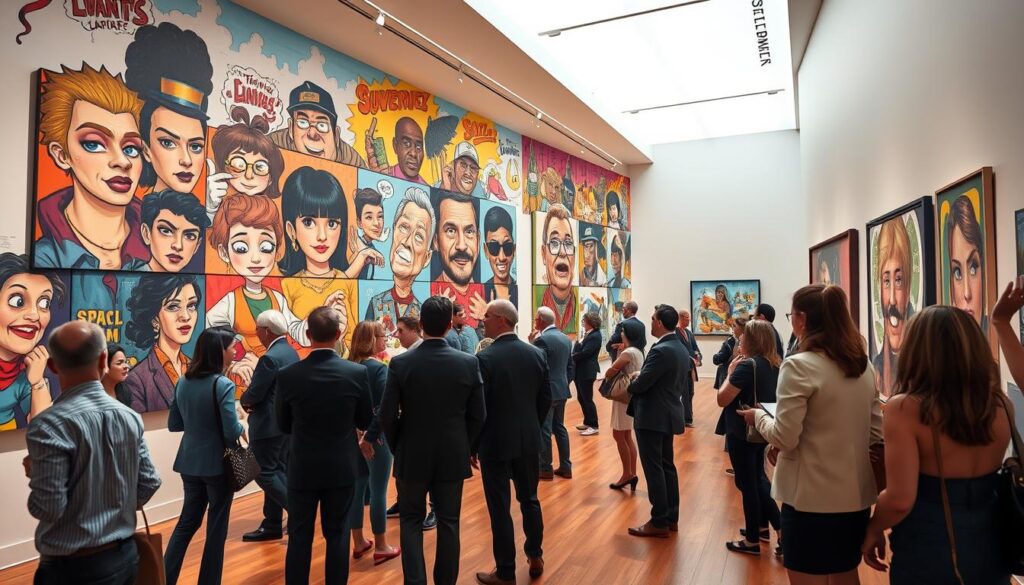
Traditional art institutions have changed how they view pop surrealism over time. At first, they saw it as “lowbrow art” and didn’t take it seriously. But pop surrealism turned this negative label into something positive, like pop art did before it.
This self-acceptance helped the movement grow outside of traditional art spaces. It showed that being different wasn’t a weakness, but a strength.
As pop surrealism’s importance grew, museums started to rethink their views. They went through different stages in how they responded:
| Phase | Description | Institutional Response |
|---|---|---|
| Initial Dismissal | Lowbrow art was often ignored or belittled by traditional institutions. | Exclusion from exhibitions and collections. |
| Acknowledgment | Growing recognition of the movement’s popularity and relevance. | Inclusion in select exhibitions, often as a novelty. |
| Select Incorporation | Curators began to feature pop surrealist works alongside traditional art. | Curated shows that juxtaposed styles and mediums. |
| Competitive Acquisition | Major museums actively sought to acquire significant works. | Retrospectives and dedicated gallery spaces for pop surrealism. |
Now, museums see that pop surrealism draws in different people. It brings in audiences that traditional art can’t. This change shows how art institutions are adapting to new cultural trends.
But, there are also debates. Some say museums accepting pop surrealism might take away its rebellious spirit. Others believe it shows the art’s worth and helps keep it alive for the future. This argument is about the difference between self-taught artists and those with formal training.
In summary, how museums react to pop surrealism shows a big cultural shift. As they try to stay relevant, they face the challenge of welcoming new art forms while keeping their core values. This struggle is similar to what many industries face when they must change or risk being left behind.
Collector Entry Points Prints, Toys, Apparel, and Collaborations
For those into pop surrealism, there are many ways to get involved. Unlike fine art, pop surrealism is more open to everyone. It lets collectors at different price levels enjoy the art.
Limited-edition prints are a great starting point. Artists make these special prints in small numbers. They keep the art affordable for those who can’t buy original paintings.
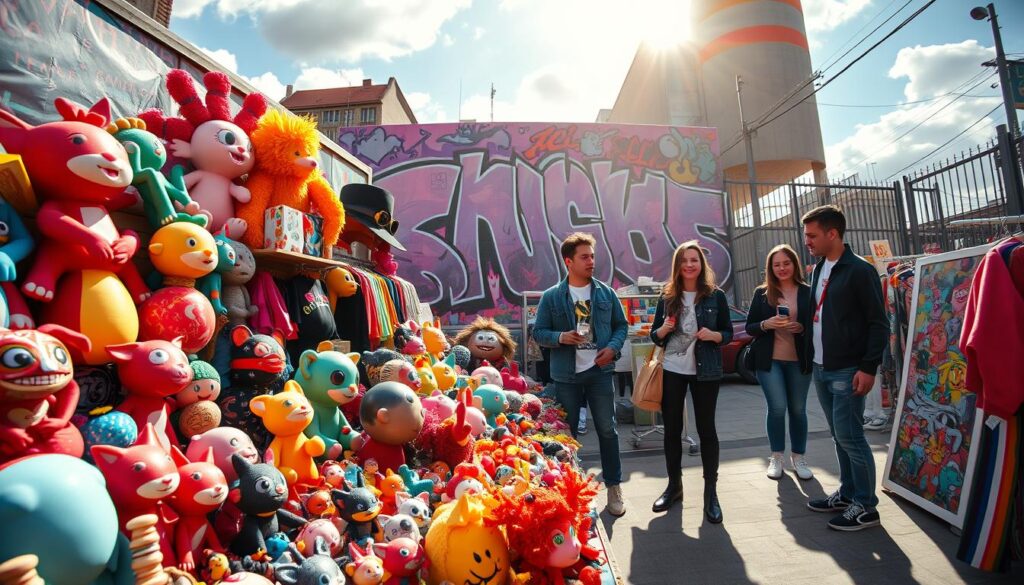
Designer toys are another big part of the pop surrealist world. Artists team up with makers to create three-dimensional versions of their work. These toys range from fun blind-box figures to rare, valuable ones.
Apparel collaborations bring pop surrealism into our daily lives. Artists design clothes, skateboard decks, and accessories. This not only helps artists earn money but also shares their work with more people.
Direct sales to fans are becoming more popular. Artists use social media and their own websites to sell directly to collectors. This way, they keep more of their earnings and connect with fans better.
Brand collaborations are also key in the market. When luxury brands team up with pop surrealist artists, it opens doors for more people to see the art. But it also raises questions about staying true to the art and not getting lost in too many projects.
In short, the pop surrealist market is a unique place. It offers a way for artists and collectors to connect in many ways. Whether through prints, toys, or clothes, there’s something for everyone to enjoy.
Market Watch Crossover Artists, Price Volatility, Authenticity, and Editions
The pop surrealism market is full of crossover artists. These artists work in both street art and fine art. This mix makes their work more appealing and affects how much it costs.
Artists like Robert Williams and Gary Panter started with raw, instinctual work. They paved the way for a movement that values authenticity over academic background.
When these artists move from street art to galleries, their prices often go up a lot. This attracts investors, making the market very volatile. It’s hard to figure out the value of these unique artworks.
Managing editions is also key in this market. Unlike traditional art, pop surrealism values uniqueness but also allows for editions. This includes limited prints, variable editions, and artist proofs. Understanding these editions is complex.
Authenticating art is a big issue in pop surrealism. Many artists have worked under different names or in secret. To solve this, services for authenticating art have popped up. There’s also blockchain for tracking art’s history and projects to keep track of an artist’s work.
Looking at market data shows interesting trends. By comparing auction results of pop surrealist works with the broader contemporary art market, we can spot valuable patterns. Knowing these trends helps investors make smart choices.
In short, the pop surrealism market is full of both chances and hurdles. Those in the field must keep an eye on market changes and art authentication. As this art form grows, its connection to street art will likely shape its future.
How to Read Pop Surrealism Symbols, Humor, Nostalgia, Subversion
Pop surrealism is more than just colorful pictures. It’s about symbols and meanings that connect us all. To get it, you need to look at four key things: symbols, humor, nostalgia, and subversion.
The symbols in pop surrealism come from our everyday world. Think cartoons, ads, and even religious figures. They’re used in new ways that make us think. This helps us see things differently and question what we thought was true.
Humor is a big part of pop surrealism. Artists use jokes and weird mixes to grab our attention. This humor can make us laugh, but then it makes us feel uneasy. It’s a way to get us to think about tough topics.
Nostalgia is used in pop surrealism too. It brings up old memories through images from the past. But it’s not just about looking back. It’s about questioning the values of those times. It makes us think about our own lives and society.
Lastly, subversion is key. Artists put familiar characters in strange situations. They mix the sacred with the profane. This makes us question what we think about art and culture. It’s a way to challenge our views.
Learning about pop surrealism helps us understand visual culture better. It’s useful for those in marketing and brand communication. Knowing how to read these symbols and meanings helps us understand people and culture more deeply.
Future Horizons AI-Generated Motifs and Immersive Retail Experiences
Pop surrealism is growing, blending with new tech. Artificial intelligence can now create images that look like the movement’s style. This makes us wonder about who should be credited for the art.
Can machines truly be as creative as artists like Robert Williams? Some artists see AI as a partner, while others value making things by hand.
Immersive retail is another area to explore. Stores are becoming like pop surrealist dream worlds. They offer a unique shopping experience, mixing art and commerce.
Augmented reality adds to this, bringing surreal images into our daily lives. It lets anyone with a smartphone see the art.
This change makes pop surrealism more accessible to everyone. Artists around the world are using these ideas in their own ways. Street art and tech together keep the movement alive and interesting.
Pop surrealism is ready to grow even more. It combines the unknown with today’s world, making it a big part of culture. As tech gets better, the movement will keep changing but stay true to its roots.