
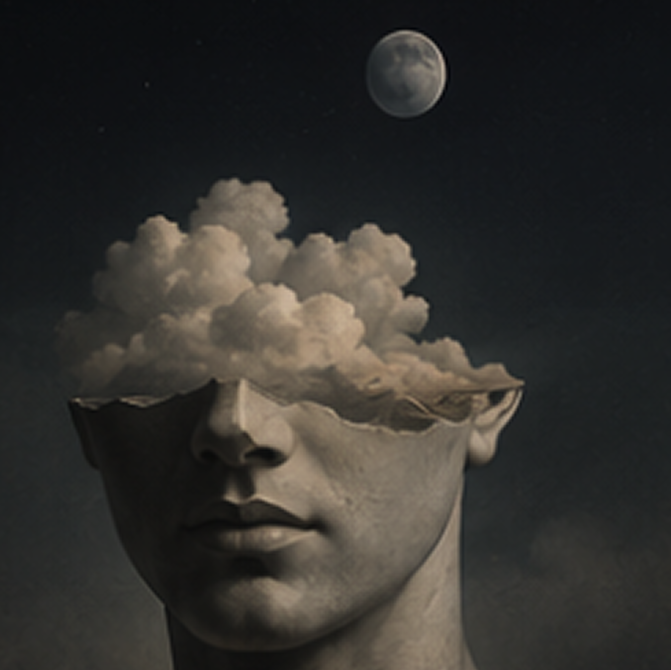
Surrealism changed the world of literature and poetry in big ways. It started as a reaction against the limits of thinking only with reason. André Breton, the founder, wanted to free the imagination by exploring the unconscious mind.
In his Manifesto of Surrealism from 1924, Breton called this art form “psychic automatism.” It’s a way to express thoughts freely, without being held back by reason.
The movement began after World War I, when many artists felt lost. Breton, Aragon, and Soupault moved from Dadaism’s nihilism to exploring the human mind. They saw dreams as a source of creativity, full of chaos and illogic.
They were inspired by Freud’s ideas about the irrational parts of our minds. They believed dreams, childhood memories, and even madness could spark creativity. This new way of creating art opened up a whole new world of literature, including famous names like Baudelaire and Rimbaud.
Techniques of the page automatic writing exquisite corpse dislocation and montage
Surrealist literature is all about new ways of writing, like automatic writing and exquisite corpse. These methods shake up old ways of telling stories and let writers explore their deepest thoughts.
Automatic writing started in 1919 by André Breton and Philippe Soupault in Les Champs magnétiques. It’s about writing without thinking, letting words flow freely. The goal is to get thoughts straight from the subconscious, without any editing.
Breton said this method helps get past the mind’s blocks, showing hidden connections. It’s based on spiritual ideas and Freud’s ideas about free association. Writers often get into a trance-like state to write without thinking.
The exquisite corpse is another key technique. It’s a game where people add to a story without knowing what others have written. This creates strange but interesting stories. It shows how chance and surprise can lead to great ideas.
Dislocation and montage come from visual arts and add to surrealist writing. Dislocation puts different things together, while montage mixes different parts to make something new. Both show how mixing things up can reveal hidden truths.
These methods believe that the best ideas come from unexpected meetings of different things. This idea is like Lautréamont’s image of a sewing machine and an umbrella on a dissecting table. It shows how surrealists see beauty in randomness.
| Technique | Description | Key Figures |
|---|---|---|
| Automatic Writing | Writing without conscious thought to access the subconscious. | André Breton, Philippe Soupault |
| Exquisite Corpse | A collaborative game generating unexpected narratives. | Various Surrealists |
| Dislocation | Juxtaposing unrelated elements to create new meanings. | André Breton |
| Montage | Combining various fragments to produce innovative texts. | Max Ernst, Man Ray |
Key poets and writers Breton Eluard Desnos Tzara and cross currents in translation
The world of surrealism is shaped by key poets and writers. André Breton, Paul Eluard, and Robert Desnos are at the heart of it. They defined surrealism and deepened its themes. Their work shows the mix of dreams and reality in surrealist poetry.
André Breton started surrealism with his manifestos. His book “Nadja” (1928) shows how surrealism changes writing. Paul Eluard, on the other hand, was a leading poet. His poems are full of clear images and deep love themes.
Robert Desnos was known for writing in a trance-like state. His work, along with Benjamin Péret and Louis Aragon, showed surrealism’s many sides. Aragon’s “Le Paysan de Paris” (1926) found the magical in everyday life.
Tristan Tzara, though known for Dada, helped surrealism grow. His use of chance in writing bridged Dada and surrealism. Belgian surrealists like Paul Nougé and René Magritte added a unique touch. They focused on deep thinking and breaking language rules.
Translating surrealism is hard because of its use of language. It’s hard to keep the original’s shock in another language. This shows how important it is to understand surrealism literature poetry in different tongues.
For more on these important figures, check out this resource on surrealist poets and writers.
Narrative surrealism novels short stories and theater that bend reality
Narrative surrealism turns traditional stories into a world of dream logic literature and surprise. It breaks away from usual story forms. It asks readers to accept the strange and the unknown.
Works like André Breton’s Nadja (1928) and Louis Aragon’s Le Paysan de Paris (1926) show this unique style. Breton mixes real details with strange events. He believes random happenings can uncover deeper truths and desires.
Aragon explores the city, focusing on the Passage de l’Opéra before it was torn down. He shows how the ordinary can turn into the extraordinary. His stories make everyday life seem magical.
- Breton’s Nadja: A mix of documentary and surrealism, using photos instead of words.
- Aragon’s Le Paysan de Paris: A walk through the city that uncovers hidden wonders.
- Antonin Artaud’s theater: Introduced the Theater of Cruelty, breaking new ground in performance.
- Guillaume Apollinaire’s Les Mamelles de Tirésias: An absurdist play that first used the term “surréaliste” in theater.
Short stories by Benjamin Péret pack surrealism into brief, intense tales. The dream stories in La Révolution surréaliste stand alone. They have their own settings, characters, and plots, all from the subconscious.
In short, narrative surrealism makes literature a place where dreams and reality mix. It moves away from realistic stories. It invites readers to connect with the text on a deeper, more instinctive level.
Political undercurrents resistance and liberation in textual surrealism
Surrealism is more than just art; it’s about fighting for freedom and standing up against oppression. In 1925, the surrealists spoke out against France’s war in Morocco. They worked with Clarté, a Marxist magazine, to create a powerful statement. This statement, “La Révolution d’abord et toujours!”, called for a social revolution.
In 1927, famous names like Breton, Aragon, Eluard, Péret, and Pierre Unik joined the French Communist Party. But, not everyone agreed. Pierre Naville wrote that surrealism and Marxism couldn’t mix. Yet, Breton argued in “Légitime défense” that surrealists could support the revolution and keep creating.
Surrealism is deeply rooted in fighting for freedom. It uses indirect messages to attack rational thinking and celebrate madness. It also questions the traditional family and national pride, seeing desire as a powerful force for change.
This part looks at how surrealists balanced their art and politics. Their work not only challenged the status quo but also shaped the language and thoughts of their era.
Contemporary echoes language poets metamodern experiments digital text art
Surrealism’s impact is seen in today’s literature, inspiring new art forms. Modern writers and artists use automatic writing and dream logic literature to push creativity’s limits in our digital world.
Language poets from the 1970s and 1980s, like Charles Bernstein and Lyn Hejinian, reworked surrealist ideas. They challenge traditional language use, creating a dialogue that questions language’s role. Their work reflects a systematic approach, echoing the surrealist tradition of automatism.
Theory has evolved, moving from Freud to post-structuralism and Marxist views on language. But, the core surrealist idea remains: language, freed from usual rules, uncovers hidden meanings and desires.
In the 21st century, literature shows a mix of modern sincerity and postmodern irony. This mix, like surrealist balance, lets authors tackle today’s issues while staying true to surrealist values.
Digital text art takes surrealist automatism further. It includes algorithmic poetry and interactive stories that question authorship and creativity. Collaborative writing platforms bring new life to the surrealist concept of exquisite corpse, where many hands shape a text.
Writers like Ben Marcus and George Saunders use surrealist methods in their work. They blend dream logic and strange images, making the ordinary seem extraordinary. Their stories open up new ways to express ideas, moving beyond simple realism.
Collecting books first editions small press chapbooks artist books and care tips
The world of surrealist literature is a treasure trove for collectors. It focuses on first editions, small press chapbooks, and artist books. Each category offers unique opportunities and challenges for those who love avant garde poetics.
First editions of surrealist texts are highly sought after. Works like Breton’s Manifeste du surréalisme (1924) and Second Manifeste du surréalisme (1930) are key. These manifestos are vital for understanding the movement’s beginnings.
Small press chapbooks are another rich area for collectors. The surrealists often published through independent imprints. These chapbooks have limited print runs and unique designs, showing the movement’s aesthetic.
Artist books are a special category where literature meets art. Illustrated editions of poets like Eluard and Breton are highly valued. They showcase the blend of artistic and literary innovation.
Keeping surrealist materials in good condition is essential. Here are some care tips:
- Store books in a cool, dry place to prevent deterioration.
- Avoid exposure to direct sunlight to protect fragile paper stocks and photographic illustrations.
- Keep original wrappers and dust jackets intact for maximal value retention.
- Document provenance to enhance scholarly interest and market valuation.
For those interested in surrealist literature, the Museum of Modern Art in New York has valuable resources. They have original copies of La Révolution surréaliste, helping those explore this field.
Exhibiting literary surrealism pairing manuscripts with drawings readings and sound
Exhibiting literary surrealism shows how text and images work together in art. It needs a special way of showing art that goes beyond just books. The first big show, “La Peinture surréaliste,” was in November 1925 at Galerie Pierre in Paris. It featured famous artists like de Chirico and Picasso, alongside surrealist stars like Arp and Ernst.
In March 1926, the Galerie Surréaliste opened, showing how art can be mixed. Man Ray’s paintings were shown with Oceanic sculptures, showing the love for indigenous art. These shows set the stage for today’s mix of manuscripts and visual art.
Today’s shows can build on these ideas by:
- Showing original manuscripts with automatic writing marks and drawings.
- Adding recorded readings to bring out the sound of poetry.
- Using sound installations with music by Erik Satie to create a full experience.
The format of La Révolution surréaliste is a guide for shows that don’t follow a straight line. It mixes different types of content, letting texts, images, and sounds work together. This way, it shows the surrealists’ love for mixing words and pictures, giving viewers a deeper look into dream logic literature and surrealist poetry.
Reading list starter canon and hidden gems for deep collectors
For those diving into surrealist literature, a good reading list is key. It should mix well-known works with hidden gems. Essential texts include André Breton’s Manifeste du surréalisme (1924), which explains surrealism’s core. His novel Nadja (1928) shows how surrealism shapes stories.
Louis Aragon’s Le Paysan de Paris (1926) looks at cities through surreal eyes. These works change how we see reality. Also, the full run of La Révolution surréaliste (1924-1929) gives a peek into the group’s collective thoughts.
For those looking deeper, there are many hidden treasures. Belgian surrealist magazines like Œsophage (1925) and Marie (1926) show Brussels’ surrealist growth. Benjamin Péret’s writing is known for its humor and sharp political views. Paul Nougé’s theories offer a different view from Breton’s.
Knowing surrealism’s literary roots is vital. It draws from Marquis de Sade, Jonathan Swift, and Gothic writers. Baudelaire, Rimbaud, Lautréamont, and Jarry also influenced them. Breton’s Entretiens (1913-1952) avec André Parinaud gives a look back at the movement’s history.
Market outlook rare editions pricing condition and provenance notes
The market for surrealism literature poetry is booming. People are more interested in avant garde poetics than ever before. They seek out first editions and small press chapbooks, mainly from the early 20th century.
These items are valuable because of their rarity and historical significance. They often had limited runs, making them highly sought after.
The price of these items depends on several things. The condition of the book, its edition, and its history are all important. Copies in good condition, with special features like inscriptions from famous writers, are worth more.
Books with a history of being owned by surrealist artists or poets are highly prized. This adds to their value.
Places like the Museum of Modern Art in New York have original copies of key works. This sets a standard for collectors. The release of Jean-Michel Place’s complete collection in 1975 also highlighted the importance of original editions.
This made more surrealist texts available to fans. As interest in surrealism grows, collectors are looking for rare Belgian materials. These are often cheaper than French ones, making them a good find for collectors.
Studies on surrealism’s influence on modern literature and art will keep the market alive. This interest will continue to drive the value of rare editions.