

In today’s world, using creative ideas can change how we see spaces. This mix of function and art challenges old ways of thinking about rooms. It makes places that not only work but also lift our spirits.
This new way of designing focuses on both the real and the magical. Innovative layouts, bold colors, and unusual materials make spaces that spark our minds and hearts. It’s not just about looks; it’s about telling a story that connects with us.
Let’s dive into how these ideas can make our daily spaces better. By mixing creativity with practicality, designers can change how we live in our homes.
Vision brief crafting a narrative for a room dream logic function and flow
Creating a vision brief is key to turning a client’s hidden desires into a real room design. This document acts as a guide, helping the designer through the complex process of surrealist interior design. It focuses on using dream logic, a way of thinking that is non-linear and connects ideas in unexpected ways.
At its core, this method sees each room as a story waiting to be told. Every piece, from furniture to colors, adds to the story that lives in the space. The Sorgin Gallery, founded by Mírian Badaró, is a perfect example. It’s not just a place to show art; it’s a space with its own history and memory.
This view shows how important it is for a space to have its own story. In homes, mixing organic shapes with geometric ones can make a space richer. The vision brief is essential for making sure design choices work together well.
Also, a good vision brief helps designers understand how people move through a space. It shows what feelings different areas should bring out and how to make transitions smooth. The goal is to make a space that’s not just useful but also touches the heart.
| Element | Function | Emotional Response |
|---|---|---|
| Furniture Arrangement | Facilitates movement | Comfort and ease |
| Color Palette | Sets mood | Calm or energizing |
| Lighting | Highlights features | Creates ambiance |
| Textures | Adds depth | Inviting or intriguing |
In short, the vision brief is more than a planning tool. It’s a key part of creating surrealist interiors. It respects the past while meeting today’s needs, making sure every choice is thoughtful and meaningful.
Palette and material strategies contrast textures mirror velvet lacquer stone
Different materials can make a space fascinating. In surrealist design, materials are more than looks. They show a mix of contrasts, as Badaró suggests.
Using different textures is key in whimsical decor. Mirror surfaces play tricks on space, making it feel odd. This fits with surrealist ideas about how we see the world.
Velvet, on the other hand, adds a touch of softness. It soaks up light and sound, making a space feel cozy. This contrasts with the shiny, reflective quality of lacquer finishes.
Stone brings a sense of solidity to a room. It balances out the fleeting nature of other materials. By choosing materials wisely, we can change how a room feels and sounds.
In surrealist design, colors and materials don’t follow the usual rules. A calm color might pop against a bold one. This mix is planned out to create a balanced look.
| Material | Characteristics | Psychological Effect |
|---|---|---|
| Mirror | Reflective, Distorting | Creates Ambiguity |
| Velvet | Soft, Absorptive | Encourages Intimacy |
| Lacquer | High-gloss, Reflective | Enhances Light Play |
| Stone | Durable, Grounding | Provides Stability |
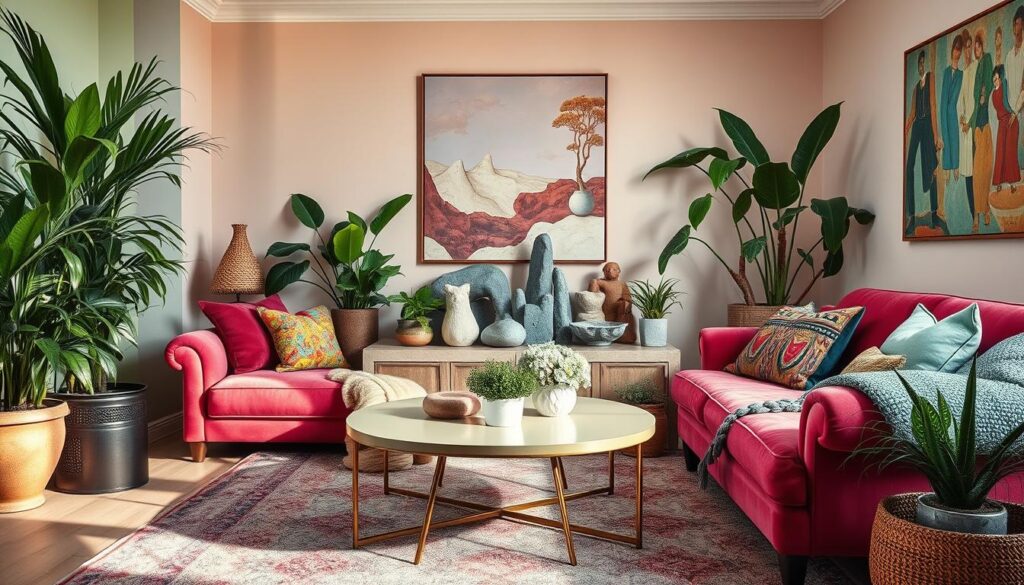
Iconic moves trompe l oeil doors levitating shelves biomorphic rugs uncanny lighting
Surrealist interior design changes how we see space. It uses special elements that are not just for looks. They also play with our minds, making us question what’s real.
Trompe l’oeil doors are a key part of this. They look like doors but aren’t. Painted or built into walls, they trick us into thinking there’s a doorway where there isn’t. This makes us see our space in a new way.
Levitating shelves are another amazing feature. They seem to float in mid-air because of hidden supports. This makes us feel amazed and curious, wanting to explore more.
Biomorphic rugs also add a lot to the space. Their shapes, inspired by nature, bring a sense of the outdoors inside. These rugs make the space feel more connected to the earth, even if it’s just through their design.
Lastly, uncanny lighting changes the mood of the room. It uses light in ways that surprise us, like unexpected shadows. This lighting makes the space feel more magical and interesting.
Creating these designs needs careful planning and skill. It’s important to make sure they look good and are safe. This means they must meet building codes and be structurally sound.
Want to learn more about using surrealist ideas in your home? Check out this guide.
Art placement pairing historic works with contemporary dream makers
Art placement in collector homes is a delicate mix of old and new. The Sorgin Gallery shows how to blend Basque architecture with Brazilian design and modern art. This mix lets old and new art talk to each other, making the art more interesting.
Setting up art in surreal homes needs careful planning. It’s not just about looks; it’s about making art from different times talk to each other. For example, putting a 17th-century Dutch painting next to a modern photo of the same theme starts a conversation across time.
In collector homes, there are many challenges. Experts must mix old and new art carefully. They need to think about how each piece fits with the others and the space it’s in.
Also, keeping the art safe is important. This means using special filters, controlling humidity, and the right way to hang the art. These steps help keep the art looking good but shouldn’t take over the space.
This plan is more than just where to put art. It’s about why it’s there, how to keep it safe, and what feelings it should give. This careful planning makes sure the art adds to the home without losing its history.
| Art Type | Historical Period | Contemporary Counterpart | Placement Considerations |
|---|---|---|---|
| Stil Life | 17th Century | Modern Photography | Sight Lines, Lighting |
| Portrait | 19th Century | Abstract Sculpture | Contextual Resonance |
| Landscape | 18th Century | Digital Art | Emotional Impact |
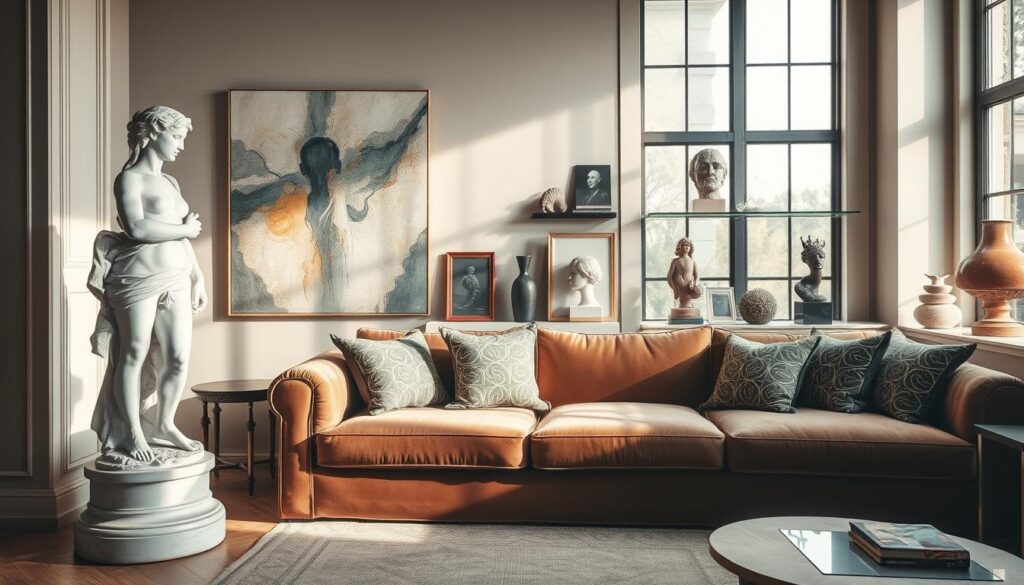
Case studies three residences with budgets sources and floor plans
Three homes show how different budgets can lead to unique designs. Each home mixes the organic with the geometric and the old with the new. This is what Badaró calls for.
In the first home, a small urban apartment, a tight budget was used wisely. A standout statement furniture piece, a velvet sofa, is the centerpiece. Walls that trick the eye and vintage lights make it cozy without changing the layout. The floor plan shows how the space was made to feel bigger.
The second home, a mid-century house, had a bigger budget. This allowed for changes like a floating shelf system and secret doors. It shows how to mix old and new materials to get the look you want.
The third home, a large collector’s house, had a big budget. It has custom art pieces and a special setup for art care. This shows how luxury and design can work together.
| Case Study | Budget Range | Key Features | Sourcing |
|---|---|---|---|
| Urban Apartment | $15,000 – $20,000 | Biomorphic sofa, trompe l’oeil walls | Vintage lighting, local artists |
| Mid-Century Residence | $50,000 – $75,000 | Levitating shelves, custom millwork | Vintage markets, artist commissions |
| Collector Home | $200,000+ | Museum-grade conservation, custom pieces | Contemporary fabricators, high-end galleries |
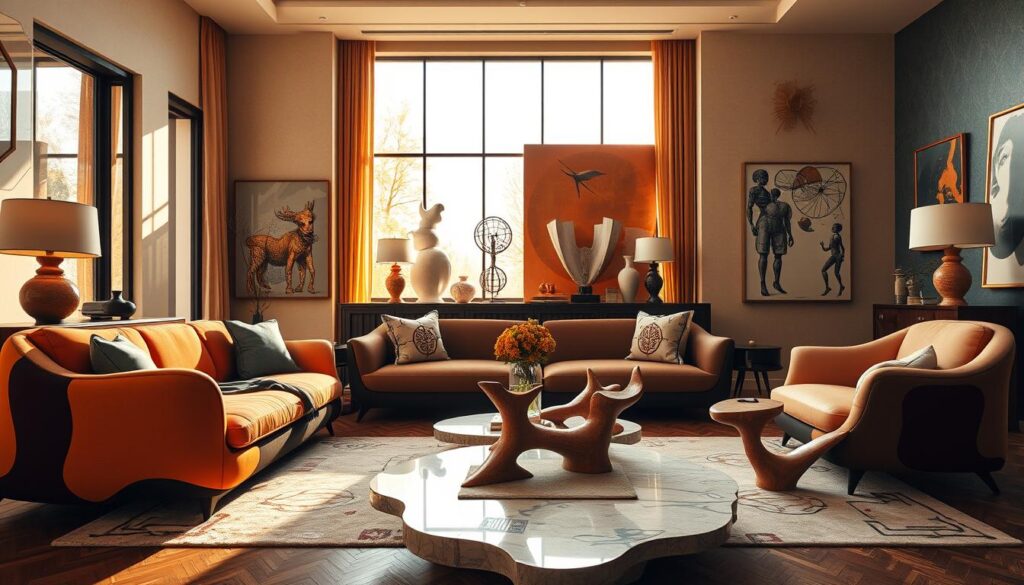
Commissioning custom pieces collaborating with artists and fabricators
Starting a custom piece for surrealist interiors means working together with designers and creators. This teamwork is key to making the unique vision of surrealist interiors come true. Ready-made furniture often can’t match the dream logic and personal symbols found in these designs.
Designers need to build strong partnerships with artists and fabricators. They begin with a detailed plan that covers the desired mood, materials, size, and budget. Artists bring their own ideas to the table, adding new perspectives that designers might not have thought of.
Fabricators play a big role too. They turn the artist’s vision into real, safe, and legal pieces. They know a lot about materials, how things are put together, finishes, and how to install them. The designer keeps everything on track with clear steps, like getting the idea approved, testing materials, and checking the final product.
It’s important to have contracts that cover important issues like who owns the idea, who’s responsible if something goes wrong, and what guarantees are offered. This careful planning and teamwork lead to the creation of amazing pieces that capture the spirit of surrealist interiors.
Practicalities storage wiring safety child friendly and conservation aware
A successful surrealist interior design must balance imagination with practicality. This ensures the space is both beautiful and functional for daily life.
Storage in surrealist interiors is creative. For example, concealed cabinetry hides behind walls, and hidden compartments in structures add both beauty and function. Furniture that does double duty is also a smart choice, saving space without losing style.
Wiring is key. It’s important to plan electrical work during construction. This includes setting up conduits and boxes for unique fixture placements. Good planning makes sure systems work well without ruining the design.
Safety is a top priority. Surrealist designs might need special engineering, like for cantilevered parts. Also, use safety glass in reflective spots, and follow fire safety rules for lights.
For homes with kids, safety doesn’t have to mean less style. Look for rounded edges, non-toxic finishes, and secure furniture. These changes keep the space safe and stylish.
In collector homes, caring for art is essential. Use UV-blocking windows, keep humidity steady, and mount art correctly. These steps help preserve art while keeping the design intact.
The practical specifications document covers all these points. It shows that being professional and creative can work together. This way, surrealist interiors can be both beautiful and practical.
Photo styling for publication set dressing lenses and color temperature
Creating images of surrealist interiors for publication is a delicate task. It requires a mix of styling and technical skills. This process is like curating art for galleries, where every detail matters.
Set dressing is key in this process. It’s about placing objects in a way that tells a story without cluttering the scene. For example, a single open book on a unique table can add a touch of whimsy. A mirror placed just right can also reveal new angles, adding depth.
Choosing the right lens is also vital. Wide-angle lenses are great for showing the layout of surrealist spaces. Tilt-shift lenses help correct any distortions, making sure buildings look right. Macro lenses, on the other hand, let photographers capture the small details, like the texture of velvet or the grain of stone.
Color temperature is another important factor. Surrealist interiors often have different light sources, like natural light, hidden LEDs, and decorative lights. Each light source looks different on camera, so finding the right balance is essential to capture the true feel of the space.
The styling brief outlines all these details, including what shots to take, what props to use, and when to capture natural light. This document is critical to ensure the published images truly show the designer’s vision, without any misleading touches.
Sourcing guide galleries fabric houses artisans and vintage markets
Getting the right items for surrealist design needs a wide network. This includes galleries, fabric houses, and skilled artisans. The Sorgin Gallery is a great example. It mixes Brazilian modernist design with today’s art in a historic Basque building.
This mix shows the importance of finding items from different places and times. It adds depth to surrealist rooms with items that have their own stories and cultural value.
Galleries focused on modern design and art are key. They offer works by both famous and new artists. These pieces often have biomorphic forms, unusual materials, and furniture that breaks the mold.
Fabric houses for luxury homes and hotels have special textiles. These include velvets, jacquards, and sheers with metallic threads. They make surrealist rooms feel rich and immersive.
Working directly with artisans lets you find unique items. These can be ceramics, glass, metal, or wood pieces. They become the stars of any room, making it look amazing.
Vintage markets, online or offline, have items from past eras. You can find 1930s French, 1970s Italian, and mid-century Brazilian pieces. The Sorgin Gallery showcases many of these.
The guide organizes these resources by type, location, and price. It has contact info, delivery times, and tips for negotiating. It’s great for finding statement furniture, the key pieces that hold a room together.
Maintenance and insurance best practices for artful homes
Keeping surrealist interiors in top shape requires a detailed plan for upkeep and insurance. Homeowners need to understand that their homes need special care. Each item, like velvet or lacquer, has its own cleaning method.
Velvet needs gentle cleaning to keep its softness and color. Lacquer surfaces should be cleaned with soft products to avoid scratches. Stone elements should be sealed regularly to last longer. Mirrors, a key part of surrealist design, should be cleaned to avoid streaks and damage.
It’s important to document custom pieces. Homeowners should keep the care instructions given by the makers. This ensures these unique items are looked after right.
Insurance for homes with art collections is more than just a standard policy. Fine art riders should be updated as the collection grows. Custom pieces might need appraisals to know their value. Changes to the building can affect insurance coverage.
A maintenance and insurance guide, made with design experts and conservators, is very helpful. It outlines a maintenance schedule, suggests service providers, and lists what to document for insurance claims.
By focusing on these steps, homeowners can keep their surrealist homes beautiful and valuable. This way, the artistic value of the home is preserved, and its worth stays strong over time.