
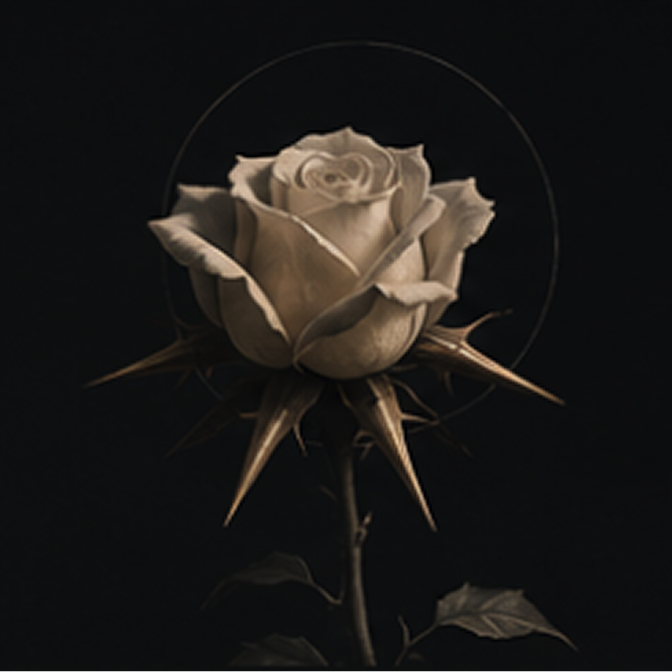
Museo Jumex’s “Diffuse Visions” turns daydreams into liminal art because it treats the half-awake mind as a serious visual state. On view at Museo Jumex in Mexico City from March 7 to August 30, 2026, the exhibition draws from the Colección Jumex to explore the unstable threshold between waking life and dreaming, where perception loosens, ordinary objects become uncanny, and the world begins to feel slightly porous.
For thesurrealists.org, the exhibition matters because it gives contemporary language to a central Surrealist problem: how art can reveal what happens when rational sight loses control. Diffuse Visions is not a historical Surrealist exhibition in the strict sense. It does not gather Breton-era dream painters or canonical Surrealist manifestos. Instead, it asks a more contemporary question. What does the dream look like when it appears inside video, installation, sculpture, contemporary photography, more-than-human imagery, and the everyday atmosphere of a museum?
The official Museo Jumex exhibition page describes Diffuse Visions as a threshold where the boundaries between wakefulness and dreaming become porous. It says the works present waking life imbued with dream scenes, creating visual projections beyond the real and immediate: an intermediate, daydream state. That phrasing gives the exhibition its strongest critical hook. Daydreaming is not treated as distraction. It becomes a liminal method of seeing.
Why “Diffuse Visions” Feels So Timely In 2026
The timing of Diffuse Visions feels especially sharp in 2026 because contemporary life is overloaded with images that are neither fully real nor fully imaginary. Social media feeds, AI-generated visuals, immersive installations, surveillance fragments, digital memories, game worlds, and private fantasies all blur the line between direct perception and mediated experience. In that context, the idea of a “diffuse” image feels culturally accurate.
Museo Jumex’s exhibition does not frame diffusion as failure. It frames it as perception. The official text says the diffuse appears not as an absence of meaning, but as a liminal perception that challenges the clarity of analytical sight. That is a useful idea for contemporary art because many of the most powerful images today do not work by delivering a single, stable meaning. They hover.
This hovering is where the exhibition meets the deeper history of Surrealism. Surrealist art has long been associated with dreams, uncanny juxtapositions, irrational associations, and states between waking and sleeping. Yet Diffuse Visions updates that terrain through a collection-based exhibition that includes artists working across video, sculpture, installation, and contemporary image culture.
The show feels timely because it asks viewers to accept uncertainty as a mode of attention. In a culture that often demands immediate explanation, the daydream becomes a form of resistance.
How Museo Jumex Builds A Daydream From Its Collection
Diffuse Visions is drawn from the Colección Jumex, which gives the exhibition a particular structure. It is not simply a survey of current dream-themed art. It is a curatorial reading of works already held within one of Mexico’s most important contemporary art collections. The museum states that the exhibition is organized by Museo Jumex and curated by Carolina Estrada García, Adriana Flores Suárez, and Natalia Vargas, who are listed as curatorial assistants.
That curatorial authorship matters because the show is built from selection and atmosphere. The artists named by Museo Jumex — Ale de la Puente, Michel François, Cyprien Gaillard, Petrit Halilaj, Jim Hodges, Emily Kraus, Pipilotti Rist, and Teresa Solar Abboud — do not represent one movement, one medium, or one national story. They are gathered through a shared perceptual problem: how the ordinary becomes uncertain.
The Spanish-language publication page for Colección Jumex: Visiones difusas lists Adriana Flores Suárez, Carolina Estrada García, and Natalia Vargas and identifies Fundación Jumex Arte Contemporáneo as editor, with the publication in Spanish and English. That matters because the exhibition is not only a gallery arrangement. It is also a research and publication project that names the diffuse as a curatorial condition.
For thesurrealists.org, that is important. A dream exhibition should not merely illustrate the dream. It should make its own method dreamlike. Diffuse Visions does that by letting works from different artists generate an atmosphere rather than a fixed argument.
Why Daydreaming Is Not Just A Softer Dream
A daydream is often treated as a lesser form of dreaming, a lazy drift away from work or attention. Diffuse Visions gives it more weight. The daydream is not sleep, but it is not full wakefulness either. It is an intermediate state where the mind begins to project, combine, distort, and invent while the world remains visible.
That condition is ideal for contemporary art. Unlike a dream, which usually happens in private and must be remembered afterward, the daydream happens while the subject is still partly present. It belongs to the museum visitor standing in front of a work, the commuter staring through a window, the child imagining another creature inside a shadow, or the artist seeing ordinary material as something unstable.
The official exhibition language emphasizes “visual projections beyond the real and the immediate.” That phrase helps define daydreaming as an active process. The daydream does not erase reality. It overlays it. It makes the immediate world carry more than it can rationally hold.
This is why the exhibition’s title is so effective. A diffuse vision is not blind. It sees too much at once. It sees waking life, dream residue, bodily memory, nonhuman presence, and future possibility inside the same image.
How The Everyday Becomes Uncanny
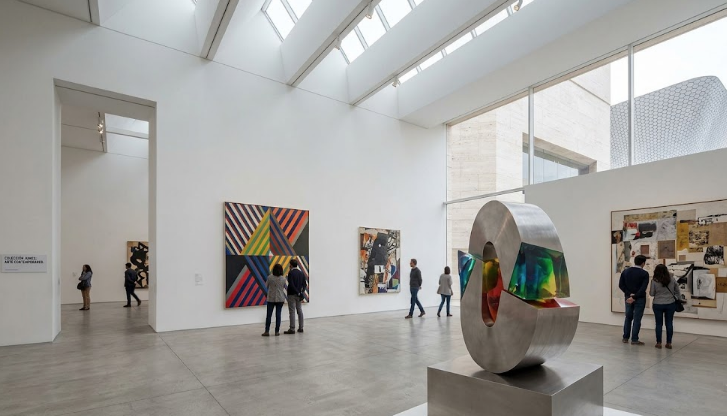
Museo Jumex says that some works in Diffuse Visions unsettle the everyday until it becomes uncanny. That sentence could almost serve as a definition of the exhibition’s Surrealist relevance. The uncanny does not require a fantasy world. It begins when ordinary life becomes unfamiliar without completely changing shape.
A chair, screen, plant, body, architectural fragment, landscape, or animal trace can become uncanny when it appears at the wrong emotional temperature. It may remain recognizable, yet something in it feels displaced. The viewer senses that the object belongs to waking life, but also to another order of experience.
This connects naturally with thesurrealists.org’s earlier writing on symbolism in Surrealist art, where ordinary forms become charged with psychic meaning. Diffuse Visions extends that idea into contemporary collection practice. It asks how art can make the everyday unstable without turning it into illustration or spectacle.
That subtlety matters. The most powerful uncanny art often works through hesitation. The viewer cannot immediately say what is wrong. The scene remains open long enough for uncertainty to become the subject.
Why Pipilotti Rist Makes The Dream Feel Bodily
The inclusion of Pipilotti Rist gives Diffuse Visions a strong link to video, sensation, color, and embodied dreaming. Rist’s work has long transformed video into an immersive, bodily, emotional field. Her images often feel soft, ecstatic, strange, intimate, and overwhelming at the same time.
A gallery note from Luhring Augustine confirms that Rist is included in Diffuse Visions with Remake of the Weekend / Still Stills, a 1998 work, and connects the exhibition to waking life imbued with dream scenes. The clean source for that gallery note is Pipilotti Rist in Diffuse Visions.
Rist matters here because her art often makes the dream sensual rather than distant. Color becomes almost tactile. Video becomes atmospheric rather than merely narrative. The body seems to dissolve into image, music, surface, and projection.
MoMA’s collection entry for Pipilotti Rist’s Ever Is Over All, made in 1997, describes an audio-video installation with overlapping projections and a dreamy musical soundtrack. That work is not the Jumex piece, but it helps explain why Rist fits the exhibition’s logic. Her practice makes waking perception feel flooded by dreamlike rhythm.
In Diffuse Visions, Rist helps turn daydreaming into something physical. The dream is not only in the head. It is in light, color, skin, music, and space.
How Petrit Halilaj Brings More-Than-Human Memory Into The Room
The official Museo Jumex text says some works reveal reminiscences of “more-than-human lives.” That phrase is especially useful when thinking about Petrit Halilaj, whose art often moves between personal memory, animals, childhood, collective history, and large-scale sculptural imagination.
The Metropolitan Museum of Art’s page for The Roof Garden Commission: Petrit Halilaj, Abetare identifies Halilaj as a Kosovar artist born in 1986 in Kostërc, former Yugoslavia, and says his work is deeply connected to Kosovo’s recent history and the consequences of cultural and political tensions in the region. That background matters because Halilaj’s dream imagery often carries history inside it.
In a daydream exhibition, Halilaj’s presence suggests that the dream is not merely escapist. It can hold memory, displacement, childhood marks, animals, and social wounds. It can transform personal and collective experience into a visual language that feels tender but not innocent.
This is important for Diffuse Visions because “liminal art” should not mean vague art. Liminality can be politically and emotionally precise. A work can hover between human and animal, childhood and adulthood, trauma and play, memory and invention, while still carrying real historical pressure.
Halilaj shows that more-than-human imagery can be a way of approaching human vulnerability from another direction.
Why Cyprien Gaillard Makes Ruins Feel Dreamlike
Cyprien Gaillard gives the exhibition another kind of diffuse perception: the strange afterlife of places, ruins, architecture, and cultural debris. Gaillard’s work often turns collapse, reconstruction, monuments, and modern landscapes into images of historical instability.
MoMA’s page for Cyprien Gaillard: The Crystal World describes how Gaillard used the anachronistic process of shooting footage on an iPhone and transferring it to 35mm for exhibition as a continuous loop. That material mismatch is important because it makes time itself feel unstable. A recent digital image is given an older cinematic body.
That is exactly the kind of temporal haze that belongs in a show called Diffuse Visions. Gaillard’s work often suggests that buildings and landscapes dream too, not in a literal sense, but through accumulated histories, damage, preservation, neglect, and repetition.
In a Surrealist context, ruins have always carried special power. A ruin is both present and absent. It is a structure and a memory of structure. It is a body after history has moved through it. Gaillard’s presence in Diffuse Visions helps push the exhibition beyond private dream imagery into collective historical perception.
The daydream becomes architectural. It happens in the broken space between what a place is and what it remembers being.
Why Teresa Solar Abboud Expands The Body Beyond Itself
Teresa Solar Abboud adds another important dimension to the exhibition because her sculptural language often involves bodily forms, geological suggestion, animal traces, industrial surfaces, and speculative organisms. Her work can feel like a fossil, a tool, a shell, a vehicle, a bone, or a body part without settling into one category.
In the context of Diffuse Visions, that ambiguity matters. Liminal perception is not only about dream images. It is also about forms that refuse to remain one thing. A sculpture can seem biological and mechanical at once. It can feel ancient and futuristic. It can suggest a creature without representing a creature.
This kind of work helps explain why Museo Jumex’s curators use “more-than-human lives” as part of the exhibition’s framing. The dream state does not belong only to human psychology. Contemporary art increasingly asks viewers to think about plants, animals, minerals, machines, environments, and nonhuman agencies as part of perception.
That shift is crucial for a twenty-first-century dream exhibition. Classic Surrealism often used animals and hybrid creatures to disturb rational identity. Diffuse Visions moves that disturbance toward ecology, materiality, and the unstable borders of life.
How The Exhibition Challenges Analytical Sight
Solar Abboud’s presence helps the show imagine a daydream that is not only personal. It is planetary, bodily, and post-human.
Museo Jumex’s official text says the diffuse challenges “the clarity of the analytical gaze.” That is one of the exhibition’s most important ideas. Analytical sight wants to separate, define, classify, and explain. A diffuse vision does not reject meaning, but it resists premature clarity.
This does not mean the exhibition asks viewers to stop thinking. It asks them to think differently. Rather than reducing each work to a single interpretation, the viewer must follow atmosphere, association, sensory response, material echoes, and shifts in scale. The mind moves more like a dream than a diagram.
This is why the exhibition belongs to a contemporary Surrealist conversation. Surrealism has always questioned the authority of rational explanation. But Diffuse Visions does not simply romanticize irrationality. It suggests that there are forms of perception that are meaningful precisely because they are not sharp-edged.
A liminal image may be unclear because it is weak. But it may also be unclear because it contains multiple states at once. The exhibition asks viewers to consider the second possibility.
Why Museo Jumex Is The Right Setting For This Exhibition
Museo Jumex is a strong setting for Diffuse Visions because the institution’s identity is rooted in contemporary art, collection-building, and public engagement in Mexico City. The museum’s own site states that through its exhibitions and public programs, Museo Jumex seeks to be a relevant institution in the field of art by producing and co-producing exhibitions and research projects that bring contemporary art practices closer to diverse audiences.
That public mission matters for a show about daydreaming. The daydream may sound private, but a museum turns it into a shared experience. Visitors move through the galleries together, encountering works that blur waking and dreaming, personal memory and collective atmosphere, human and more-than-human presence.
The exhibition’s location in Mexico City also matters. Museo Jumex sits inside one of the most active contemporary art cities in the Americas, a place where global art networks, local audiences, institutional collections, and experimental practices intersect. Diffuse Visions is not only a thematic collection show. It is part of a larger conversation about how contemporary museums can stage uncertainty without making it decorative.
That is why the exhibition feels stronger than a simple dream-themed show. It uses the museum as a liminal machine: a place where works from a collection are reassembled to change how perception operates.
How “Diffuse Visions” Avoids Generic Dream Imagery
The danger in any exhibition about dreams is that it can become too soft, too vague, or too dependent on familiar symbols. Clouds, sleepers, eyes, moons, floating bodies, and strange landscapes can quickly become decorative if the curatorial argument is weak. Diffuse Visions avoids that problem by focusing on perception rather than dream iconography alone.
Its central question is not “what images look dreamlike?” but “what happens when the boundary between waking and dreaming becomes porous?” That difference matters. It allows the exhibition to include works that may not look conventionally surreal at first glance. A video, sculpture, installation, or photograph can participate in the daydream by altering attention, not merely by depicting a fantasy.
This makes the exhibition useful for contemporary readers. In 2026, dream imagery is everywhere, from AI prompts to fashion campaigns to music videos to game environments. What matters is no longer simply whether an image looks strange. What matters is whether it changes how reality is perceived.
Diffuse Visions appears to understand that distinction. It treats the dream not as a style, but as a state of relation.
Why The Daydream Is A Political And Emotional Space
A daydream may appear gentle, but it can carry political and emotional force. To daydream is to step away from the immediate demands of the visible world. It can be a form of longing, refusal, repair, projection, or survival. It can give shape to what cannot yet exist.
That is why the exhibition’s focus on the intermediate state is more serious than it may sound. The daydream sits between acceptance and transformation. It does not fully leave reality, but it does not fully obey it either.
For artists such as Halilaj, dreamlike or more-than-human forms can carry personal and collective memory. For Rist, video can transform the body’s sensory relationship to image. For Gaillard, ruins and anachronistic media can make history feel unstable. For Solar Abboud, sculptural form can move between body, machine, organism, and geological trace.
Together, these practices suggest that liminal art is not escape from the real. It is a way of approaching the real when ordinary categories fail.
Why “Diffuse Visions” Belongs On The Surrealists
Diffuse Visions belongs on thesurrealists.org because it shows how the Surrealist interest in dreams continues without needing to repeat Surrealist style. The exhibition does not depend on historical costume. It does not simply revive dream painting. It asks what dream perception means in contemporary art now, when images are digital, immersive, global, ecological, bodily, and unstable.
Its importance lies in how it reframes daydreaming as a serious artistic state. The daydream is not a minor distraction. It is a zone where perception loosens and the world can be recomposed. It is where the ordinary becomes uncanny, the human meets the more-than-human, and the analytical gaze loses its exclusive authority.
For readers interested in Surrealism, that is the exhibition’s central gift. It reminds us that the dream was never only about sleep. It was always about perception under pressure.
Museo Jumex’s Diffuse Visions turns daydreams into liminal art because it gives form to the half-seen, half-felt condition of contemporary life. In its galleries, waking life does not disappear. It becomes porous. The dream does not replace the real. It enters the real and makes it shimmer.