
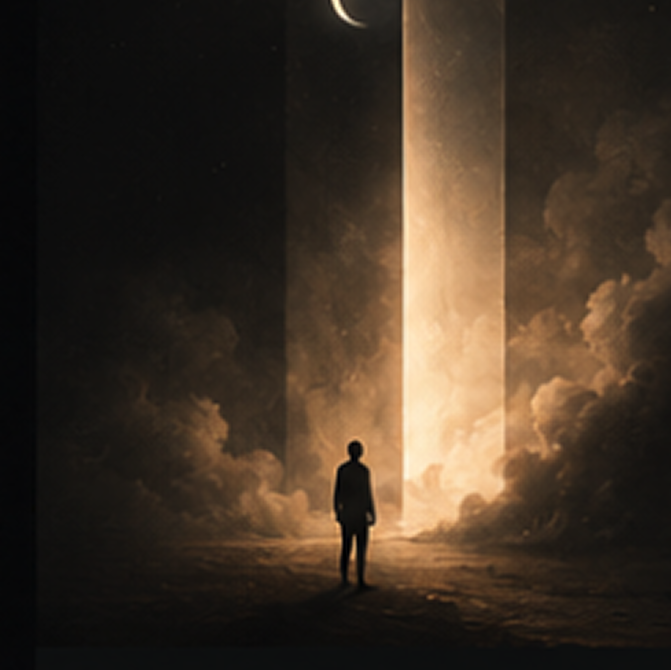
A small ocean swallowed at the San José Museum of Art turns water into something stranger than a natural resource. Opening on July 10, 2026, and running through February 14, 2027, the group exhibition brings together Sholeh Asgary, Patricia Belli, Kiyo Gutiérrez, Jessie Homer French, Erin Jane Nelson, and Sunaura Taylor. The museum’s official exhibition page describes the show as a gathering of six intergenerational and international feminist artists whose work reorients human relationships to water through ecological entwinement, plant life, animal life, human bodies, and histories that flow across time.
For thesurrealists.org, this exhibition matters because water has always been one of art’s most unstable symbols. It reflects and erases. It nourishes and destroys. It carries memory, waste, migration, weather, myth, and trauma. a small ocean swallowed is not a historical Surrealist exhibition, yet its central idea feels deeply connected to surreal visual culture: water becomes a living archive, a body, a mirror, a wound, and a dream-space where human and nonhuman life cannot be separated.
Why Water Becomes More Than A Subject
The strongest idea in a small ocean swallowed is that water is not treated as background scenery. It is the connective force that holds the exhibition together. The San José Museum of Art frames the show through rivers, oceans, aquifers, swamps, and aqueducts, all of which shape human and more-than-human life. The museum’s press release also connects the exhibition to water justice, ecological entwinement, and the material histories of bodies of water.
That framing changes how the viewer reads the artworks. Water is not a passive blue surface. It is a system. It carries memory between bodies, landscapes, species, climates, and communities. A river can be a route of survival. An aqueduct can be an engineered dream of control. A swamp can hold histories that refuse clean separation. An ocean can suggest migration, extraction, mourning, and ecological scale at once.
This is where the exhibition becomes useful for a Surrealism-focused site. Surrealist art often made ordinary objects behave like psychic evidence. A clock, a shell, a body, a room, or a landscape could become a sign of hidden pressure. Water works in a similar way here. It appears familiar, but the exhibition asks viewers to see it as a medium of memory and entanglement rather than a decorative element.
That connection fits naturally with thesurrealists.org’s earlier writing on nature and the subconscious mind in Surrealist art, where natural forms are treated as carriers of unconscious, symbolic, and cultural meaning. In a small ocean swallowed, water becomes the natural form that refuses to stay outside the self.
How The Exhibition Turns Ecology Into A Dream Structure
The phrase “ecological entwinement” could sound abstract, but the exhibition gives it a clear visual and bodily meaning. The artists do not treat ecology as a distant environmental problem. They present it as something already inside the body, the memory, the archive, the voice, and the material conditions of everyday life.
The museum says the exhibition threads together plant, animal, and human life while celebrating water as a model of interconnectivity across space and time. That phrase matters because it shifts water from object to structure. Water is the exhibition’s logic. It is the system through which separate beings become linked.
A surreal ecology of memory begins with that collapse of separation. Human life is not on one side and nature on the other. Bodies are porous. Communities depend on invisible flows. Histories pass through rivers and reservoirs. Sound travels through water differently than through air. Drought, flood, contamination, and repair are not symbolic issues alone; they change bodies and futures.
The exhibition’s title, a small ocean swallowed, makes that idea feel bodily. To swallow an ocean is impossible, intimate, violent, and mythic. It suggests a body trying to contain something too vast. It also suggests the opposite: the ocean entering the body, making the boundary between person and planet unstable. That is where the title becomes powerfully surreal. It is not a literal action. It is an image of scale breaking down.
Why Feminist Art Changes The Meaning Of Water
The six artists in a small ocean swallowed are described by SJMA as intergenerational and international feminist artists. That identity is more than a curatorial label. It changes the exhibition’s reading of water. Feminist art has long questioned whose bodies are treated as visible, whose labor sustains life, whose environments are sacrificed, and whose knowledge counts as historical evidence.
In this exhibition, water is not separated from bodies, care, vulnerability, or survival. It becomes a way to think about dependence without reducing dependence to weakness. The body needs water. Communities need water. Ecosystems need water. Memory often gathers around water: wells, rivers, shorelines, floods, family routes, irrigation systems, rituals, and disappearances.
This feminist framing keeps the show from becoming a generic climate exhibition. It does not simply say that water matters. It asks how water is lived, sensed, controlled, remembered, and politicized. That question matters when the show includes artists working across different materials and cultural positions.
Metro Silicon Valley’s July 2026 preview noted that the exhibition uses performance, sound, sculpture, and visual art to explore water as a connective force linking bodies and ecosystems. Its San José exhibition preview also emphasized that the show remains on view into February 2027.
That range of forms is important. Water is not only seen. It is heard, touched, feared, carried, lost, polluted, remembered, and imagined. A water exhibition that includes sound and performance can address the body differently from a painting-only show. It can make ecology feel less like a theme and more like a condition.
How The Six Artists Expand The Water Archive
The artist list gives the exhibition its breadth. Sholeh Asgary brings a practice known for sound, performance, and interdisciplinary forms. Patricia Belli, Kiyo Gutiérrez, Jessie Homer French, Erin Jane Nelson, and Sunaura Taylor each bring different relationships to body, landscape, ecology, political memory, and material experimentation.
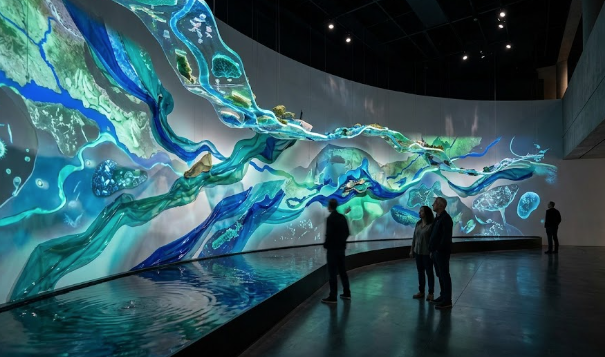
SJMA’s press release identifies the bodies of water at stake: rivers, oceans, aquifers, swamps, and aqueducts. This list is important because each water form carries a different kind of history. A river moves. An ocean absorbs. An aquifer hides below the visible world. A swamp resists clean boundaries. An aqueduct reveals infrastructure, engineering, and power.
That range lets the exhibition avoid a single romantic image of water. Water can be sacred, but it can also be managed. It can be healing, but it can also carry violence. It can support life, but it can be withheld, redirected, contaminated, or extracted. The artists’ works open water as an archive of relations rather than a single environmental symbol.
This is where a small ocean swallowed becomes a photographic, sonic, sculptural, and performative memory system. The exhibition does not need to turn water into a human figure for water to feel alive. It lets water appear as relation: between species, between generations, between land and body, between injury and repair.
For surreal visual culture, that is a strong idea. The surreal often begins when a familiar category no longer holds. In this exhibition, “water” no longer means a stable natural element. It becomes a network of bodies, histories, infrastructures, and images.
Why Sowing Sustainability Gives The Show Institutional Weight
a small ocean swallowed is presented in conjunction with the San José Museum of Art’s Sowing Sustainability Initiative. SJMA describes that initiative as rooted in the belief that caring for the planet is central to caring for visitors, the community, and the museum’s collections. That institutional frame matters because it places environmental responsibility inside the museum’s operating logic, not just inside the exhibition text.
The difference is subtle but important. A museum can stage an ecological exhibition while leaving its own practices unexamined. SJMA’s Sowing Sustainability framing suggests a broader institutional effort to connect planetary care with cultural care. The exhibition becomes part of a larger argument about what museums owe to their publics and their environments.
For readers of thesurrealists.org, this raises a useful question: what happens when a museum treats ecology as a memory system? Museums are often understood as places that preserve objects. a small ocean swallowed suggests that preservation also involves relationships, watersheds, bodies, and future conditions. The archive is not dry. It is saturated with environmental dependence.
This makes the exhibition’s surreal quality sharper. Water moves through places museums try to stabilize. It evaporates, floods, stains, erodes, carries, and returns. It resists the fixed display case. When a museum organizes an exhibition around water, it is also organizing a show around a force that cannot be fully contained.
Why Water Justice Makes The Dream Political
The SJMA press release places the exhibition in relation to water justice, which gives the poetic framing a political center. Water justice asks who has access to clean and safe water, whose landscapes are damaged, whose communities bear the cost of extraction or pollution, and whose relationships to water are erased by infrastructure or policy.
That matters because a purely aesthetic reading of water can become too soft. Water is beautiful, but beauty is not the whole subject. The same element that gives life can expose inequality. A river can mark territory. An aqueduct can signal technological achievement while revealing who controls flow. A swamp can hold biodiversity and histories of displacement. An ocean can connect worlds while carrying the memory of migration, trade, war, and loss.
The exhibition’s surreal ecology of memory works because it holds those tensions together. It allows water to be dreamlike without turning it into escape. The dream here is not a retreat from politics. It is the strange image that appears when ecology, history, body, and justice overlap.
That overlap is especially important now, when climate stress makes water one of the most urgent cultural subjects. Drought, flood, sea-level rise, pollution, and resource conflict are not future abstractions. They already shape how communities live. Art cannot solve those conditions by itself, but it can change the emotional and symbolic language through which viewers understand them.
How Sound And Performance Make Water Feel Bodily
One reason a small ocean swallowed feels stronger than a standard environmental art show is its use of performance and sound alongside visual art and sculpture. Sound is especially important because water is rarely silent. It drips, rushes, echoes, absorbs, muffles, crashes, evaporates into quiet, and carries vibration through bodies.
Sholeh Asgary’s inclusion is especially relevant here, since her practice is closely associated with sound, hybrid art forms, and performance. Her work helps the exhibition think beyond water as an image. Water can become acoustic memory, a pressure, a frequency, or a bodily condition.
Performance shifts the question again. A body performing with or through water cannot remain detached from ecology. Breath, thirst, skin, movement, disability, care, and endurance all become part of the work’s meaning. Water is no longer an environmental topic placed outside the viewer. It becomes a condition shared by bodies.
This is another point of contact with surreal visual culture. Surrealism often changed the body by making it porous, hybrid, fragmented, or symbolic. a small ocean swallowed does something different but related: it places the body inside ecological flow. The self is not sealed. It is part of a moving system.
Why The Exhibition Makes Memory Feel Fluid
Memory is often imagined as something stored: an archive, a file, a photograph, a room, a box, a text. Water makes memory feel less stable. It moves. It dissolves. It returns in altered form. It can preserve traces or wash them away. It can hold trauma in a landscape without turning that trauma into a fixed monument.
That is why a small ocean swallowed can be read as an ecology of memory. The exhibition’s artists do not only address water as matter. They address the histories water carries. Bodies of water are not empty places. They have witnessed labor, extraction, migration, ceremony, ecological damage, recovery, and intimate life.
The title’s smallness also matters. A “small ocean” sounds impossible because oceans are defined by scale. Yet memory often works that way. A tiny object can hold a vast history. A cup of water can evoke a river. A local aqueduct can point toward global infrastructure. A small sound can carry a massive grief. The exhibition’s title captures that compression.
For thesurrealists.org, this is the most compelling reason to read the show through a surreal lens. The surreal is not always a strange creature or impossible room. Sometimes it is a shift in scale so extreme that reality becomes newly visible. A swallowed ocean is one such image: intimate and planetary at the same time.
What The Show Suggests About Museums, Climate, And The Imagination
a small ocean swallowed arrives at a moment when museums are under pressure to rethink what cultural relevance means. An exhibition about water cannot be limited to formal beauty. It has to address care, repair, access, survival, and memory. SJMA’s exhibition does that by bringing together artists whose works connect ecology to body, sound, performance, and more-than-human life.
The result is not a simple message piece. Its power lies in refusing separation. Art, ecology, politics, memory, and the body flow through one another. That refusal is what makes the exhibition feel surreal without turning it into fantasy. Water becomes the material that exposes the false boundary between viewer and world.
The show also suggests that museums can become spaces where environmental thought is felt rather than only explained. A visitor may enter expecting artworks about water and leave thinking about how water has already shaped their own body, family, city, and sense of time. That is a strong cultural function for an art exhibition.
Why Water Becomes The Dream That Remembers Us
a small ocean swallowed turns water into a surreal ecology of memory because it treats water as a living system of relation. It links six feminist artists, multiple bodies of water, ecological justice, sound, performance, sculpture, visual art, and the museum’s sustainability work into a single field of thought.
The exhibition’s dreamlike force comes from its refusal to keep water outside the human story. Water is not scenery. It is kinship, infrastructure, wound, archive, sound, body, and future. It is what connects plant, animal, and human life across space and time. It is also what reveals how fragile those connections have become.
For readers of thesurrealists.org, the lesson is clear: the strange does not always arrive from outside nature. Sometimes the most surreal image is the one we already live inside. A river under a city, an aquifer beneath memory, an ocean carried in the body, a swamp that refuses clean borders, an aqueduct that turns water into politics — these are not metaphors detached from reality. They are reality seen through a deeper imaginative pressure.
That is why a small ocean swallowed feels so timely. It asks viewers to see water as the dream that remembers us: a force that holds histories, bodies, and futures together, even when human culture tries to pretend it stands apart.