
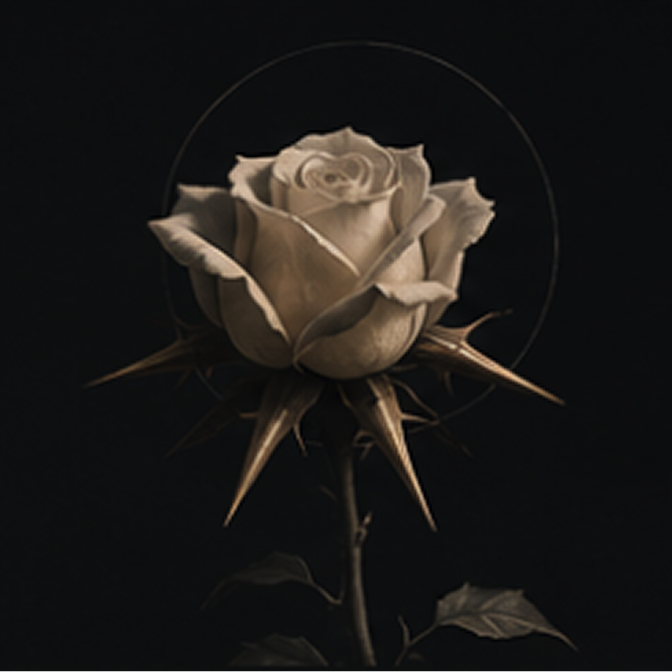
Let’s cut through the fog of dream analysis for a second. Have you ever looked at a twisted tree in a painting and felt it was judging you? I’m only half joking.
The most potent works from this movement didn’t just use landscapes. They used them as a direct challenge to the rules of their time—and ours. A melting pocket watch isn’t just about time. It’s about the heat of expectation, the pressure to conform.
This isn’t a pretty gallery walk. It’s more like an autopsy. Artists used natural symbolism and subconscious art to dissect identity. Why could a simple, organic form be more revolutionary than a political manifesto?
It’s because these images spoke directly to the gut. They tapped into the wild, untamed logic of dreams where anything is possible. The movement’s debt to Freud’s influence on Surrealism is well-documented, but the real magic was in the execution.
They turned the personal psyche into a public battleground. We’re about to dive into that wild, gendered subconscious of the 20th century’s most intriguing art rebellion. Buckle up.
Female Surrealists: Remedios Varo, Dorothea Tanning, and Kay Sage
Surrealism’s history often seems like a dream diary for men. But women like Remedios Varo, Dorothea Tanning, and Kay Sage were the real dreamers. They didn’t just paint dreams; they built psychic ecosystems from scratch.
These women used different tools. They rejected the Freudian and misogynistic symbols of men. Instead, they used natural symbolism to show states of mind men ignored. They explored introspection, entrapment, alienation, and quiet rebellion.
Remedios Varo’s work is like a soulful clockwork. She made devices from roots, seedpods, and filaments. Her art was a radical statement against the mechanical world. Varo showed that transformation and knowledge are organic processes, not just engineering.
Her women are not just muses but mystics and architects. They journey through bright, botanical worlds.
Dorothea Tanning made the familiar strange. She turned sunflowers into wild, bursting plants. Her work is a metaphor for repressed desire and breaking free from domestic bounds. It’s like a Rebel Without a Cause for the subconscious.
Kay Sage’s vision is cold and metaphysical. Her landscapes are post-apocalyptic. Her figures stand before impossible architecture. The forms are stark, the palette muted.
Even in her work, the organic forms are powerful. Draped fabrics suggest grieving figures or ghosts. Sage connected human emotion to the barren landscape. She showed a deep, modern alienation—the feeling of being a stranger in your own mind.
These artists updated Surrealism. They focused on the complex interior self, not just male desire. They showed that the most powerful surreal imagery comes from a personal, organic understanding of nature. The male gaze saw objects; their gaze saw entire worlds.
Masculine and Feminine Archetypes in Surrealist Imagery
Surrealism didn’t just use symbols; it twisted them. Artists like Picasso and Dalí took old archetypes and changed their meanings. This was subconscious art that flipped cultural norms.
The Minotaur was once seen as a symbol of raw masculinity. Venus was the ideal of femininity. But Surrealists saw these as too simple. They turned these icons into strange, new organic forms.

René Magritte was a master of this twist. His men, dressed in suits, often had apples for faces or floating heads. It’s a clever way to show that even the most controlled can be fragile.
Meret Oppenheim’s Object (Le Déjeuner en fourrure) is another example. A fur-covered cup, saucer, and spoon, it’s both familiar and unsettling. It challenges our expectations, making us feel uneasy.
This table shows how Surrealists changed key archetypes:
| Archetype | Traditional Symbolism | Surrealist Subversion | Exemplary Work |
|---|---|---|---|
| The Minotaur | Brute force, primal masculinity, danger. | Rendered vulnerable, contemplative, or absurd; a monster trapped in a labyrinth of its own making. | Pablo Picasso’s Minotauromachy (1935) |
| Venus / Feminine Ideal | Passive beauty, object of desire, perfection. | Fused with machines or animals; made actively monstrous or intellectually dominant. | Leonor Fini’s The Shepherdess of the Sphinxes (1941) |
| Empty Desert | Barren psyche, spiritual void, isolation. | Populated with impossible organic forms and melting clocks; becomes a stage for the irrational. | Salvador Dalí’s The Persistence of Memory (1931) |
| The Suited Man | Bourgeois rationality, control, anonymity. | Decapitated, faceless, or with absurd substitutions; rationality is depicted as hollow. | René Magritte’s Son of Man (1964) |
The Surrealists didn’t create new symbols. They used what we already know. By twisting these symbols, they made us question our assumptions. Why do we see the desert as empty? Why must the feminine be passive?
This is the heart of subconscious art. It challenges our cultural memories. The organic forms in Surrealist art are not just strange. They are a way to make the familiar seem odd.
So, when you see a classic symbol in Surrealist art, think about what’s happening to it. Is it being deflated or merged? That’s where the real critique lies. It’s a dream with a subversive message.
The Androgyne and Gender Fluidity in Surrealist Art
Surrealist artists didn’t just mix genders; they erased the idea of gender altogether. They used the androgyne to show the power of total freedom of the mind. It was more than just painting unclear figures—it was a bold challenge to the idea of only two genders.
Claude Cahun was a key figure in this movement. They said, “Shuffle the cards. Masculine? Feminine? It depends on the situation.” Cahun lived this idea through their photos, showing the body as changeable. This was subconscious art turned real, a constant change of self.
But how do you show something as hard to grasp as “beyond gender”? Artists used natural symbolism to bring this idea to life. The Surrealist androgyne often looked like:
- A Merged Form: Rock turning into flesh, or human parts becoming tree limbs. This showed identity as old as the earth, yet as alive as a growing plant.
- An Alchemical Creature: Figures with both “masculine” and “feminine” traits, not as a mix, but as something new and better—the psychic version of turning lead into gold.
- A Dream Protagonist: Ambiguous beings in impossible places, their ambiguity making them perfect for the dream world.
This use of natural symbolism was brilliant. It showed that gender fluidity is natural, not just a modern idea. The androgyne was as natural as a river changing its path—a force of nature, not a mistake.
The core idea of this subconscious art is deep: identity is as changeable as a dream. It’s not a problem to solve, but a world to explore. By showing the androgyne, artists offered a new way to see ourselves as always changing, not fixed.
In the end, the Surrealist androgyne is more of a question than a person. It’s a question mark made real, asking us to dream of who we could be without limits. This idea is their lasting gift to us.
Critical Reception: How Gender Influenced Art Criticism
Let’s look behind the scenes of the art world and see how gender played a part. The way Surrealist art was received wasn’t just about taste. It was shaped by the social norms of the time. Female artists often faced condescending reviews.
Women’s deep explorations were described with limited words. Critics used terms like “charming,” “delicate,” and “intuitively feminine.” This language hinted that their work was emotionally engaging but not deep.
For example, Remedios Varo’s use of organic forms was seen as “decorative craft.” But Max Ernst’s similar work was praised as groundbreaking. This shows how gender influenced art criticism.
The bias was clear and consistent. Women’s forays into subconscious art were seen as personal. Men’s were viewed as philosophical. This double standard hurt women’s careers and art values for years.
Leonora Carrington’s complex art was once called “fantasy.” Now, we see it as deeply analytical. Critics were limited by their own biases, missing the depth of her vision.
The table below shows how the same concept was labeled differently based on the artist’s gender.
| Critical Concept | When Applied to Female Artists | When Applied to Male Artists | The Subtext |
|---|---|---|---|
| Artistic Source | Intuition, dreaminess | Philosophical inquiry, systematic exploration | Women are passive vessels; men are active thinkers. |
| Use of Symbolism | Personal mythology, private code | Universal archetypes, intellectual language | Women’s experiences are niche; men’s are profound. |
| Technical Execution | Meticulous, decorative, craft-like | Innovative, masterful, genius-level technique | Women are skilled laborers; men are visionary creators. |
| Engagement with Nature | Charming, delicate organic forms | Powerful, raw, elemental forces | Women tame nature; men conquer it. |
This wasn’t just a few bad reviews. It was the norm. Understanding this history is key to why we’re reassessing art now. We’re learning to appreciate subconscious art without bias.
The market is slowly changing. As we remove sexist criticism, the true power of the art is revealed. It turns out the art was always groundbreaking. The criticism was just outdated.
Modern Gallery Perspectives on Gender in Surrealism
The white cube gallery space is now a place for changing art history’s gender views. When you enter a major museum’s Surrealism section, it feels like a strong statement. Gone are the endless Dali shows, like a classic rock station playing “Stairway to Heaven” over and over.
Now, places like the Metropolitan Museum of Art and the Tate Modern are showing art in new ways. Remedios Varo is no longer just a side note to Max Ernst; she’s the star. These shows link the movement’s ideas to today’s struggles in bold ways.
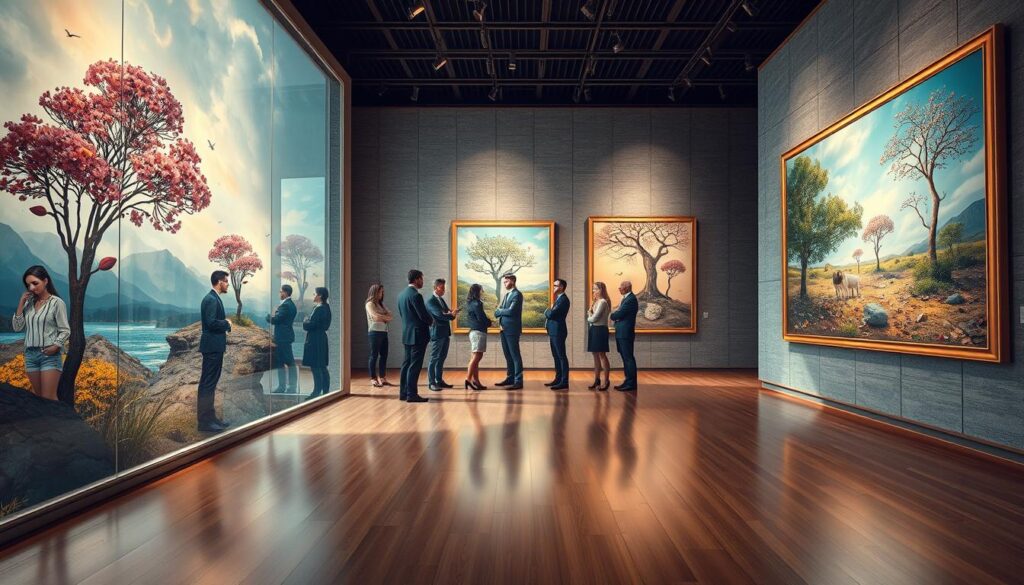
Leonora Carrington’s paintings, with their twisted roots and talking birds, are seen as more than just dreams. They’re seen as early signs of eco-feminism. Curators connect her organic forms to artists like Ana Mendieta, who also explore the female body and nature.
This is where the magic happens. Putting a Kay Sage landscape next to a modern piece about isolation creates a dialogue across decades. The gallery becomes a time machine, showing these themes were always important, just overlooked.
Today’s best curatorial work highlights Surrealism’s non-binary and queer themes. Claude Cahun’s photos are no longer just for “gender studies” sections. They’re part of the main story, challenging old binary views.
This change isn’t just about theory. It’s about seeing and feeling the connection between old and new art. When you see Dorothea Tanning’s sculptures next to modern works on identity, the link is clear. The gallery acts as a corrective lens, making history sharp and clear.
What’s behind this change? It’s partly the market catching up with scholarship. It’s also a cultural push for more complex stories. But mostly, it’s recognizing Surrealism’s power in challenging all norms, including gender. Modern galleries, at their best, celebrate this radical intent.
They’re not just showing art. They’re starting conversations. And in these talks, the natural symbolism of the past speaks to our evolving self-understanding today. This isn’t just rewriting history. It’s a strong argument for why these artists are important today.
Investment Opportunity in Female Surrealist Artists
Forget about stocks; the real smart investment might be in art by women who changed reality. The art market is waking up. It’s now valuing the work of female surrealists as a strong investment.
Let’s look at the numbers. Auctions for Remedios Varo, Leonora Carrington, and Dorothea Tanning are breaking records. A major Carrington piece that used to sell for a modest price now fetches a fortune. This isn’t just about diversity. It’s the market recognizing the value of these artists’ work.
Why is this happening now? It’s because of scarcity and the depth of their art. These artists created limited work, often facing tough challenges. When a rare piece comes up for sale, it’s a big deal. But it’s the art’s depth that really drives its value.
This art offers a unique value. It explores universal themes through subconscious art. It also carries powerful political and personal messages. A Varo painting is more than a mystical scene; it’s a statement on alchemy, exile, and intellect.
Buying a Tanning or Sage piece is more than getting a beautiful item. It’s investing in a new art history. Your collection gains cultural capital and financial value. It’s a smart choice that also feels poetic.
The imagery in their art is full of natural symbolism. It talks to us in a way that goes beyond time. This makes their work timeless, unlike trends or abstract art. The subconscious art of these pioneers speaks to us on a deep, human level.
So, what should you do? Explore beyond the big names. Kay Sage’s and Ithell Colquhoun’s work is gaining attention. Their use of natural symbolism to explore inner worlds is both compelling and accessible. The dream is now awake, and for smart collectors, that’s great.
Conclusion: Redefining Identity Through Visual Expression
So, where does this wild dream leave us? Surrealism was never just about weird pictures. It was a place where artists explored their own identities.
Artists like Remedios Varo, Dorothea Tanning, and Kay Sage used natural symbolism to create new identities. They turned personal stories into universal ones. They used organic forms to show the inner workings of the mind.
This way of seeing challenged all fixed labels. It showed that the self can be fluid and ever-changing. The idea of being both male and female was not just a dream, but a real possibility.
Today, their work is gaining more attention. This isn’t just a passing trend. It shows that the most powerful subconscious art often comes from those on the edges of society.
Their paintings are more than just art. They are guides to new possibilities. In a world that likes to put people in boxes, their work offers a different path. The dream, it seems, is a powerful tool for change.
The canvas acts as a mirror. In its reflection, we see not just who we are, but who we could become.