
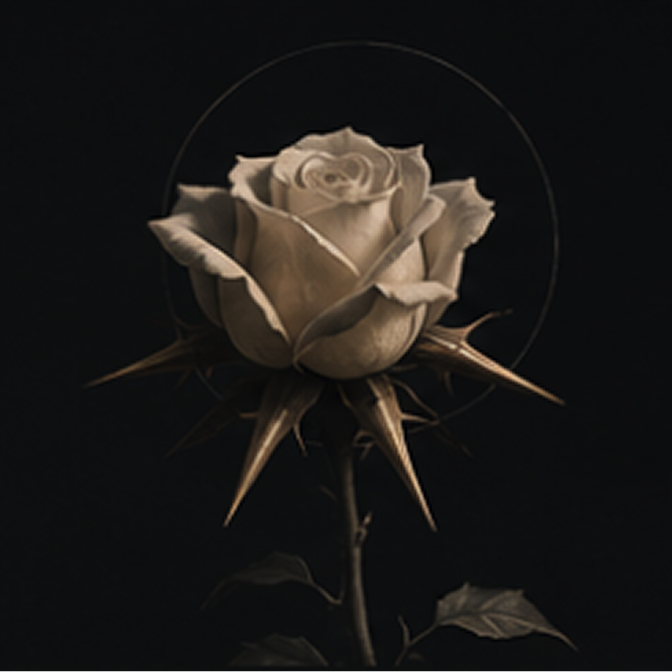
Let’s be honest. When you think of Surrealism, you see melting clocks. It’s the art history equivalent of a greatest hit.
But what about the twisted trees? The screaming rocks? The forests that seem to whisper secrets of a different kind of rebellion?
I’m here to argue that the real surrealist insurrection wasn’t just in their dreams. It was in the dirt, the bark, and the very DNA of the world they painted. This isn’t a placid nature walk. Consider it a forensic investigation.
We’ll examine how artists like Max Ernst, Leonora Carrington, and even Salvador Dalí weaponized the natural world. Their goal? A quiet coup against reason, polite society, and the political status quo.
This is the story of political surrealism at its roots. We start where they did: not with a manifesto, but with a single seed of subconscious dissent. Think of it as the anarchist’s guide to gardening.
The Natural World as Gateway to the Unconscious
The Surrealist revolution wasn’t fought on streets but in forests. Nature’s chaos became a blueprint for mental liberation. While Freud cataloged dreams in Vienna, artists found a different cure.
They traded the couch for the compost heap. Their premise was radical and simple. The modern mind was seen as a cage.
To find creativity and truth, they smashed the lock. They believed the key was disorientation, not deeper analysis. The natural world was their tool.
A gnarled tree root doesn’t care about symmetry. A cloud formation has no narrative. A blooming fungus is both life and decay.
These organic forms operate outside human reason. For the Surrealists, that was the point. By immersing themselves in this chaos, they could break free from civilized thinking.
This was a deliberate strategy, a core tactic of their art revolution. It worked in several key ways:
- Bypassing Logic: Nature doesn’t argue. A twisted vine or a weathered stone presents a fact, not an idea. Staring at it forces the mind to stop interpreting and start receiving.
- Embracing the Grotesque: The “beautifully grotesque”—like a carcass or a thorn—breaks aesthetic conventions. This shock to the system was meant to jar perception loose.
- Accessing the Id: The uncontrolled growth, the violent storms, the silent decay—these were seen as direct reflections of the primal, uncensored self. The id has a landscape, and it’s a swamp, a forest, a desert.
This wasn’t romantic escapism or a simple “back to nature” trope. That would imply a retreat. The surrealist revolution was an advance. It was an active campaign to dismantle perception itself, using nature as both weapon and workshop.
Forget today’s meditation apps promising calm focus. The Surrealists sought the opposite: a fertile, overwhelming confusion. Their goal was to get gloriously lost in the thicket of the mind, using the real thicket as their guide. It was less about finding yourself and more about losing the self you were told to be. Their path wasn’t around nature, but straight through it—directly into chaos.
Biomorphic Forms and Organic Abstractions
The surrealist revolution started with shapes that didn’t fit into any category. Jean Arp’s woodcuts and Yves Tanguy’s paintings show forms that seem alive. They could be organs, sea creatures, or lava, but they are none and all at the same time.
This was a bold move against the world’s strict plans. In the early 20th century, everything was built on grids and logic. The Surrealists wanted to break this mold with their biomorphs, shapes that defy our usual ways of seeing.
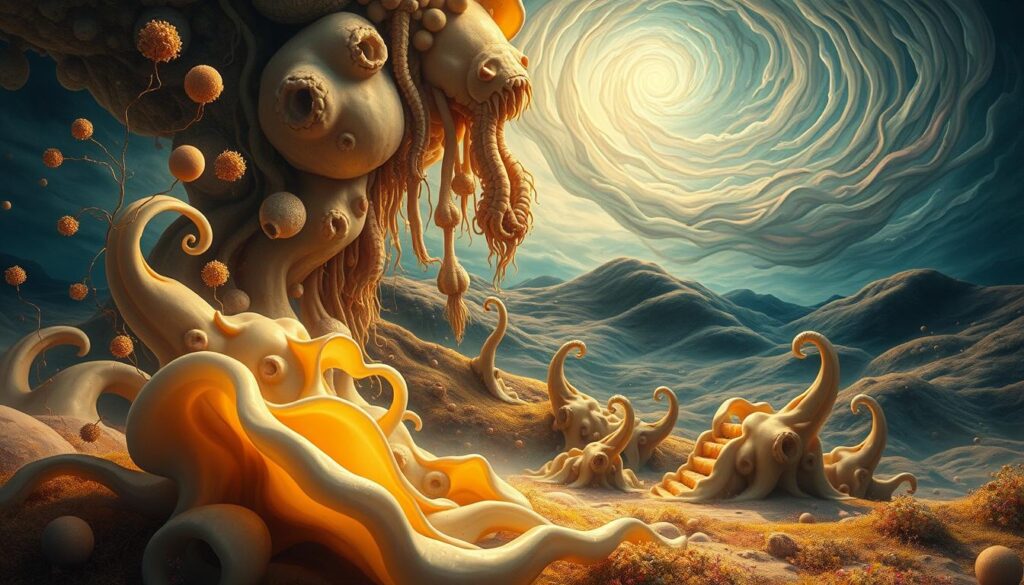
Creating art that celebrated ambiguity was a radical act. In a time of war and conformity, embracing the unknown was subversive. It was like throwing a vine into the gears of progress. This was their way of rebelling against the status quo.
To understand the stakes, let’s look at the clash of aesthetics. The table below isn’t just about art styles; it’s about competing worldviews.
| Feature | Rational / Industrial World | Surrealist Biomorphic World |
|---|---|---|
| Primary Shape | Straight line, cube, circle | Amoeba, cloud, root system |
| Implied Value | Clarity, efficiency, control | Fluidity, mystery, and possibility |
| Relationship to Nature | Nature to be mastered and mapped | Nature as a collaborator and inspiration |
| Social Metaphor | The standardized citizen | The unpredictable individual |
| Psychological Effect | Order, but potentially repression | Wonder, but potentially unease |
The biomorph’s power is in its resistance to a single interpretation. A rational form says, “I am a brick.” But a biomorphic form asks, “What do you feel I am?” This makes the viewer think and feel, not just look.
So, when you see those blobs and tendrils in Surrealist art, don’t just see weird shapes. See a quiet, persistent argument. It’s an argument for the messy, the irrational, and the uniquely personal over the cold, the efficient, and the mass-produced. That argument is the enduring heartbeat of their revolution.
Max Ernst’s Forests and Leonora Carrington’s Creatures
Let’s explore two Surrealist worlds: one dark, the other full of life. We’ll look at Max Ernst and Leonora Carrington’s art. They turned nature into a tool for change.
Ernst’s forests are eerie. His forêts are not peaceful. They’re like courts, judging us.
Walking through Ernst’s art is like facing a battle. His work reflects the horrors of World War I. His forests show a world trapped and broken.
Now, let’s visit Leonora Carrington’s world. It’s full of life and wisdom. Her creatures, like hyenas and horses, teach us about a different way of life.
Carrington’s art is about creating a new world. Her creatures show us a society based on intuition and wisdom. This is her vision for a surrealist revolution.
Ernst and Carrington show Surrealism’s range. Ernst questions the past, while Carrington imagines the future. One artist critiques, the other creates.
| Aspect | Max Ernst’s Forests | Leonora Carrington’s Creatures |
|---|---|---|
| Primary Mood | Menacing, claustrophobic, judicial | Whimsical, wise, rebellious |
| Relationship to Reality | Interrogates post-war trauma & societal breakdown | Builds new mythologies & matriarchal societies |
| Nature’s Role | Psychological prison; witness to human folly | Intelligent ally; source of ancient knowledge |
| Political Implication | Critique of the existing, broken world order | Blueprint for an alternative, liberated future |
| Form & Style | Petrified, granular textures (frottage) | Fluid, organic, detailed symbolism |
Ernst’s art is a warning. It shows a world that thought it was advanced but was actually cruel. His forests are a harsh judgment.
Carrington’s art offers hope. Her creatures show a world based on intuition and myth. This is a serious call for change in our world.
Together, Ernst and Carrington show the power of Surrealism. Ernst critiques, Carrington creates. They show how nature can be used to argue for change.
The Four Elements as Surrealist Metaphors
Wellness experts say the elements bring balance. But the Surrealists used them for revolution. They saw Earth, Air, Fire, and Water as tools for change, not harmony.
These elements were like a guide for dissent. Each one tackled a different part of the crisis. Together, they formed a plan for an art revolution in art and minds.
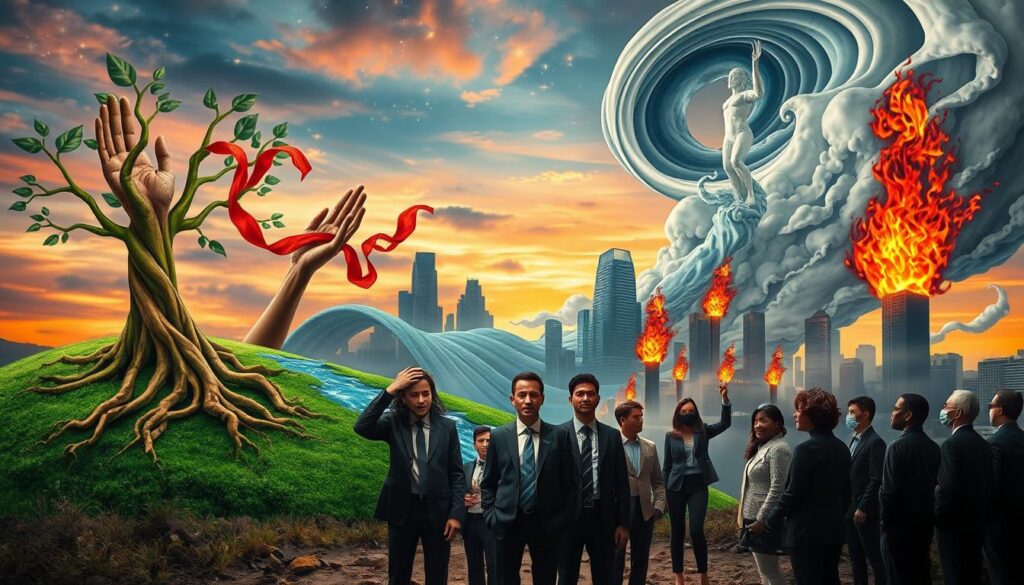
Earth was about digging deep. Artists like Max Ernst dug into the canvas, revealing hidden truths. Dalí’s landscapes showed a world that had lost its way.
Earth was the past unearthed, often to horrifying effect. It held secrets and skeletons.
Air was about dreams and fears. The Surrealists saw the sky as full of hope and emptiness. Joan Miró’s paintings showed both sides of this.
The sky was a symbol of the unknown future. It was both exciting and scary.
Fire was about change and destruction. It was the surrealist revolution at its most intense. Fire meant destroying old things to make way for new.
Artists like Yves Tanguy used fire to show transformation. Fire was a way to start anew.
Water was about change and identity. It was the world of dreams and the subconscious. Surrealist water was always moving, reflecting and distorting.
Artists like Leonora Carrington explored the fluid self. Water was where solid identities dissolved.
This approach was not just theory. It was a call to action against a world that felt stale. The art revolution they proposed was elemental, a return to basic forces to change how we see the world. For more on this, check out this gallery of contemporary elemental art.
| Element | Surrealist Metaphor | Key Artist / Example | Symbolic Meaning |
|---|---|---|---|
| Earth | Archaeological & Psychological Excavation | Salvador Dalí’s parched landscapes | Cultural drought, buried trauma, the weight of history |
| Air | Canvas for Desire & Cosmic Dread | Joan Miró’s starry constellations | Boundless possibility, political hope, existential anxiety |
| Fire | Destructive Transformation & Purification | Yves Tanguy’s molten, chaotic forms | Burning old systems, creative annihilation, radical change |
| Water | Fluidity of Identity & The Primordial | Leonora Carrington’s hybrid sea creatures | The subconscious, melting ego, pre-human states of being |
When you see a Surrealist painting, look beyond the weirdness. Notice the element at work. Is it the crumbling earth, the heavy sky, the fire of change, or the flowing waters of the self? Their surrealist revolution was elemental. It shows that to change the world, you must sometimes reduce it to its most basic parts.
Dreams, Metamorphosis, and Natural Transformation
The Surrealists were fascinated by the caterpillar’s transformation. They saw it as a messy, biological act of change. Nature was their guide, showing them how to embrace constant change.
They focused on becoming over being. This was their way of rebelling against a world that values stability. They saw the world as ever-changing, just like nature.
Their art captured the moment of change. It showed creatures in the middle of transforming. This was not just fantasy but a political statement.
By celebrating change, they challenged all fixed structures. A painting of a queen turning into geese questioned social hierarchies. They used art to change how we see the world.
Their message was both hopeful and clever. If a caterpillar can become a butterfly, what could a person become? They showed that even the hardest things can change with enough imagination.
Looking at a Magritte or a Miró is more than just seeing a strange image. It’s seeing a blueprint for change. Their art showed that change is not just possible but natural. This idea is a powerful form of social rebellion.
The surrealist revolution asked a bold question. If everything in nature can change, why can’t we? Their art remains a powerful reminder of this question.
Collecting Surrealist Nature Art: What to Look For
Before you buy a biomorphic sculpture, think: what part of the surrealist revolution are you getting? This art isn’t just for looks. It’s more like a statement against the status quo. Collecting here is about making a political statement, not just decorating.
Look for tension in the art. Does it feel calm or a bit scary? That’s the point. Search for forms that are almost recognizable but not quite. This is where the artist’s subconscious shines through.
For beginners, start with works on paper. Etchings, frottages, and ink drawings are great. They show the artist’s raw, unfiltered thoughts. You’re not buying a finished product; you’re getting a glimpse into the artist’s mind.
Want to know what to look for? Ignore what’s trendy. Ask what the art is arguing against. A peaceful Yves Tanguy landscape might seem calm but is actually a protest against a harsh, rational world. That’s its true essence.
| Principle | What It Means | Why It Matters |
|---|---|---|
| Seek the Argument | Every piece is a rebuttal. Identify what societal norm or logic it undermines. | This separates authentic surrealist work from mere weirdness. You’re collecting a position. |
| Value the Unfinished | Favor sketches, studies, and works on paper over grand, finished oils. | The raw, immediate gesture often carries more revolutionary energy than a perfected museum piece. |
| Embrace Ambiguity | If you can label it instantly, it’s probably not doing its job. The best pieces resist easy reading. | Ambiguity forces engagement. It makes the viewer complicit in creating the meaning. |
| Ignore the Sofa | Color-matching is the enemy. This art should clash with your decor, not complement it. | Its purpose is to disrupt your domestic peace, to be a persistent, beautiful irritant. |
In the end, collecting this art is joining a long fight. It’s not just about hanging a picture. It’s about taking a stand. When you buy a piece, you support its political surrealism. You bring the fight into your home. Choose your fragment wisely.
Conclusion: Nature as Mirror to the Human Psyche
The Surrealist journey into the wild was never a vacation. It was a covert op. Those twisted trees and hybrid beasts were more than strange images. They were psychological X-rays, revealing the fractures in a supposedly rational world.
This visual probing was part of the same surrealist revolution that fueled poets mailing explosive verses. The art revolution happened in the forest and the dream diary. By mapping the chaos inside onto the world outside, they made both spaces ripe for change.
Their greatest act of social rebellion was this simple, dangerous idea: the garden and the mind grow from the same soil. To reimagine one is to reshape the other. The blueprint for a new reality wasn’t in a political pamphlet. It was in the shape of a melting clock or a stone with fur.
We look at a Max Ernst forest or a Carrington creature and see ourselves—untamed, contradictory, and endlessly capable of metamorphosis. The revolution, it seems, was always photosynthetic.