
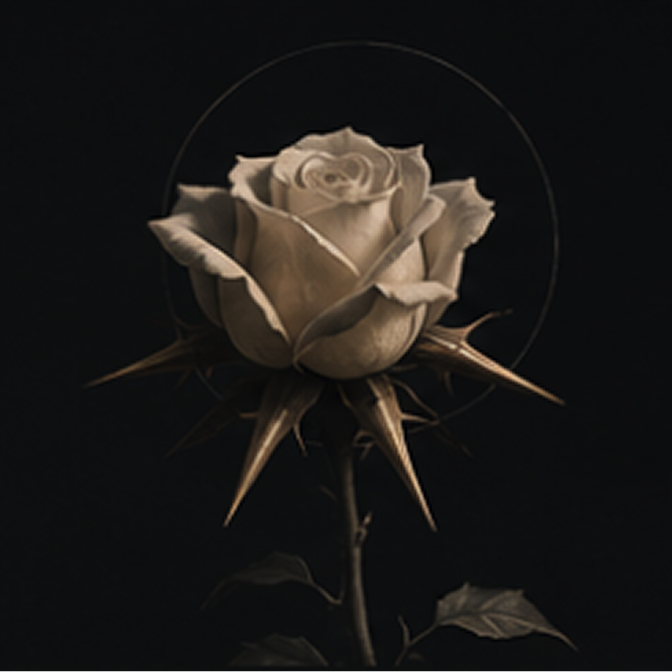
Na Kim: Portraits turns clouds into vanishing faces by asking a deceptively simple question: what if a portrait does not need a human sitter to feel psychologically alive? On view through Art&Newport from July 28 to August 10, 2026, the site-responsive exhibition places new cloud paintings by Na Kim inside Newport’s Old Stone Mill in Touro Park, with a complementary horizontal painting at the Redwood Library & Athenaeum. The project is curated by Dodie Kazanjian and presented in collaboration with the Redwood Contemporary Arts Initiative.
For thesurrealists.org, the exhibition matters because it turns atmospheric looking into a contemporary form of dream portraiture. Kim is known for psychologically charged portraits of people, but Portraits shifts her attention upward. Instead of painting fixed faces, she paints clouds: forms that gather, loosen, blur, dissolve, and reappear. The result feels close to Surrealism’s interest in unstable identity, unconscious projection, and the strange moment when the mind finds a face where no face exists.
Art&Newport’s official Na Kim exhibition page says the works are mounted in weatherproof frames inside the circular structure of the Old Stone Mill, whose open oculus frames the sky above. That setting is crucial. The exhibition does not merely show clouds. It stages a conversation between painted clouds and actual clouds, between image and weather, between portrait and disappearance.
Why “Portraits” Turns The Sky Into A Face
The strongest idea in Portraits is that clouds and faces share a condition: they never stay still. A face changes through mood, memory, light, age, angle, and attention. A cloud changes through wind, vapor, shadow, and time. Kim’s move from human subjects to cloud forms does not abandon portraiture. It expands the category.
Vogue’s July 2026 coverage reports Kim’s own explanation that faces and clouds both feel inscrutable because they are constantly shifting, appearing, and disappearing. The Vogue report on Art&Newport places Portraits within a summer program where Kim’s cloud paintings look skyward from one of Newport’s most historic sites.
That framing gives the exhibition its Surrealist force. Clouds become portraits because viewers bring their own mental pattern-making to them. Anyone who has seen a face in weather already understands the mechanism. The mind wants to organize vapor into identity. Kim slows that instinct down and turns it into painting.
This is not fantasy in the theatrical sense. It is more subtle. The surreal quality comes from the instability of recognition. A cloud almost becomes a face, then slips away. A painting almost becomes a portrait, then returns to atmosphere. The viewer sees identity forming and dissolving at the same time.
How Na Kim Reframes Her Portrait Practice
Kim’s background makes this cloud series more compelling. Born in 1986 in Seoul, South Korea, she lives and works in Brooklyn, New York. Her artist biography notes recent solo exhibitions including Memory Palace at Nicola Vassell Gallery in New York in 2025 and her debut solo presentation at White Columns in 2023. It also notes that she serves as Art Director of The Paris Review and Creative Director of Farrar, Straus and Giroux.
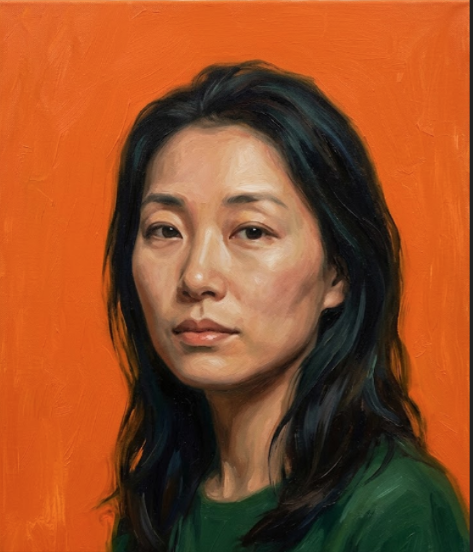
That design and publishing context matters, but Kim’s paintings should not be reduced to design. Her gallery biography describes her portraits as mimetic yet conceptually abstract, with imagined subjects that create encounters both intimate and confrontational. Nicola Vassell Gallery’s Na Kim artist page describes her practice as a meditative character study rather than an exercise in accuracy or narrative.
Portraits takes that idea further. If Kim’s earlier paintings ask how an imagined person can feel present, the cloud paintings ask how a nonhuman form can carry the same psychological charge. The sitter disappears, but the act of looking remains. The painted cloud becomes a face-like event rather than a face-like object.
That shift makes the title meaningful. Portraits is not ironic. It insists that portraiture can exist without stable features, biography, or even a body. A portrait can be a structure of attention.
Why The Old Stone Mill Changes The Meaning Of The Paintings
The exhibition’s setting gives the paintings their strongest conceptual pressure. The Old Stone Mill is a 17th-century stone windmill in Newport’s Touro Park, and Art&Newport places Kim’s paintings inside its circular stone architecture. The works sit in weatherproof frames, while the open oculus above draws the actual sky into the installation.
This architecture changes the viewer’s role. A conventional gallery asks visitors to look at paintings on walls. Portraits asks them to look at paintings, then look up, then compare the painted sky with the moving one. The viewer becomes part of a loop: image, weather, recognition, doubt, return.
That loop is why the show feels like a dream mechanism. The stone mill becomes a chamber for looking. The open ceiling behaves almost like an eye. The sky enters the exhibition without becoming an artwork in the usual sense. It remains weather, but it also becomes a shifting counter-image to Kim’s paintings.
For a Surrealist reading, this matters because the installation turns place into perception. The mill is not a neutral container. Its age, circular form, stone surface, and upward opening make the paintings feel ritualistic without becoming mystical cliché. The viewer stands inside architecture and watches identity drift through the sky.
How Clouds Become A Language Of Impermanence
Clouds carry obvious associations with impermanence, but Kim’s exhibition avoids easy symbolism by making that impermanence formal. A cloud is not just a metaphor for passing time. It is a form that cannot hold itself in place. Paint, by contrast, fixes a moment. The tension between cloud and canvas gives Portraits its emotional charge.
A cloud painting is always paradoxical. It captures what cannot be captured. It gives a border to something that resists borders. It makes atmosphere into an object, then reminds the viewer that the real thing above the mill is already changing.
That tension makes the show feel linked to the Surrealist language of unstable signs. Surrealist art often makes ordinary objects behave like symbols with uncertain meanings: a clock, a shell, a stone, a bird, an eye, a cloud. Kim’s clouds are not coded in a strict iconographic sense. They are unstable enough to receive projection.
This connects naturally with thesurrealists.org’s earlier writing on symbolism in Surrealist art, because Kim’s cloud portraits make hidden meaning feel temporary rather than fixed. The symbol appears only while the viewer holds it in mind.
Why Faces In Clouds Still Feel Surreal
The impulse to see faces in clouds is common, but common experiences can become strange when an artist isolates them. Kim’s Portraits turns that mental reflex into the subject of the exhibition. The viewer is not only looking at clouds. The viewer is watching the mind look.
That is where the work touches Surrealist territory. Surrealism often explored the border between perception and projection. A dream image may feel external, but it also comes from the mind. A found object may look ordinary, but desire changes it. A cloud may be vapor, but attention turns it into a face.
Kim’s paintings do not need overt Surrealist theatrics because the surreal event happens in recognition itself. The question is not whether a cloud “really” looks like a face. The question is why the mind wants the cloud to become one. Portraits makes that desire visible.
The paintings also complicate identity. A human portrait often promises some kind of access to character. Kim’s clouds withhold that promise. They suggest presence without biography. They offer likeness without a sitter. They produce intimacy without stable identity.
How The Redwood Library Adds A Second Register
The complementary horizontal cloud painting at the Redwood Library & Athenaeum gives the exhibition another rhythm. If the Old Stone Mill emphasizes sky, circular architecture, and upward looking, the Redwood setting brings the work into a historic library environment. The cloud becomes not only an atmospheric form but also a thinking image.
That shift matters because libraries organize memory, language, and record. A cloud painting inside or near that context feels different from a cloud painting beneath an open oculus. It suggests the relationship between perception and memory. Clouds pass; libraries preserve. A painted cloud sits between those conditions.
The Redwood component also widens the exhibition’s civic frame. Art&Newport is not placing Kim’s work in a conventional white cube. It is moving contemporary painting through Newport’s historic spaces. This makes the exhibition site-specific in a real sense. The paintings do not simply travel to Newport; they respond to the city’s architecture, sky, and institutional memory.
That approach supports the SEO phrase Na Kim Portraits because the title becomes more than a series name. It names an encounter between painting, place, weather, and memory.
Why The Exhibition Feels Contemporary
Portraits feels contemporary because identity now changes quickly across images, screens, profiles, archives, and fragments. Faces circulate constantly, but recognition has become unstable. A portrait may be an image, an avatar, a memory, a filter, a thumbnail, or a projection. Kim’s cloud paintings address that instability without depicting screens.
Clouds become a quiet analogy for the contemporary self. They are visible but unstable. They appear personal because viewers project onto them, yet they remain impersonal weather. They gather form, then lose it. That makes them powerful subjects for a painter already interested in the uncertain nature of portraiture.
Kim’s publishing and design background also gives this project an interesting edge. As an art director and creative director, she works in worlds where images must communicate quickly. Her paintings, by contrast, ask for slower attention. Portraits resists quick legibility. It lets an image remain unresolved.
That unresolved quality is important for contemporary art. In an image culture built around clarity, instant recognition, and algorithmic sorting, Kim’s clouds refuse to settle. They ask viewers to stay with ambiguity.
How “Portraits” Changes The Meaning Of Looking Up
The act of looking up is central to the exhibition. Inside the Old Stone Mill, visitors do not simply view paintings at eye level. They also become aware of the sky above them. This physical gesture changes the mood of the encounter.
Looking up can feel devotional, observational, childish, scientific, or dreamlike. It can imply wonder, weather-watching, prayer, navigation, boredom, or escape. Kim’s installation activates all of those associations without naming them directly.
That matters because Surrealism has often treated vertical space as psychologically charged. The sky can become freedom, void, dream, threat, or mirror. In Kim’s installation, the sky is not a painted backdrop. It is an active participant. The real clouds may contradict the painted ones. The weather may shift the reading. Light may change the stone. Time becomes part of the exhibition.
The result is a portrait show that refuses a fixed subject. The sitter is sky, painting, visitor, memory, and projection all at once.
Why Vanishing Faces Matter To Surrealist Visual Culture
The phrase “vanishing faces” captures the exhibition’s strongest surreal effect. Faces usually anchor identity. They let viewers locate emotion, recognition, and social connection. A vanishing face disrupts that security. It suggests that identity is temporary, unstable, and dependent on attention.
Kim’s clouds become vanishing faces because they hover at the edge of recognition. They do not fully become people, yet they borrow portraiture’s emotional intensity. They are present and absent at the same time. This tension makes the exhibition feel more psychologically charged than a simple cloud study.
In historical Surrealism, the face often becomes a site of transformation: masked, fragmented, doubled, hidden, replaced, or made strange. Kim’s approach is quieter. She does not deform a face. She finds face-like uncertainty in the sky. That makes her project feel contemporary rather than derivative.
The vanishing face also asks a wider cultural question. How much of identity depends on what another person sees? If a cloud can briefly become a portrait through attention, then portraiture is not only about resemblance. It is about the unstable relationship between subject and viewer.
Why Na Kim’s Clouds Belong On Thesurrealists.org
Na Kim: Portraits belongs on thesurrealists.org because it shows how Surrealist thinking can appear in a contemporary painting exhibition without relying on obvious dream imagery. The show uses clouds, architecture, weather, and perception to explore unstable identity. It turns a historic Newport site into a chamber of projection.
The exhibition also shows how site-responsive art can expand a painting’s meaning. A cloud painting in a gallery might remain a cloud painting. A cloud painting inside the Old Stone Mill, beneath a real sky framed by an oculus, becomes part of a perceptual event. It makes viewers compare painting with weather and recognition with disappearance.
That is why the topic has strong cultural value. It links contemporary portraiture, site-specific installation, atmospheric painting, and Surrealist perception. It also gives readers a fresh way to think about Na Kim’s practice: not only as portrait painting, but as a study of how images become intimate before they become clear.
Why Clouds Become Portraits When The Mind Refuses Stillness
Na Kim’s Portraits turns clouds into vanishing faces because it understands that looking is never passive. The viewer completes and loses the image at the same time. A face appears, then slips back into weather. A cloud becomes a subject, then returns to vapor. A portrait promises recognition, then withholds it.
That instability gives the exhibition its quiet power. Kim does not need to make the sky fantastical. She only needs to place painted clouds where the real sky can answer them. The Old Stone Mill becomes a viewing instrument. The Redwood Library adds memory and historical depth. Art&Newport’s temporary format intensifies the sense of passing time.
For readers of thesurrealists.org, the lesson is clear: the surreal can begin with the simplest act of attention. A cloud becomes a face because the mind wants form. A portrait vanishes because form cannot hold. Kim’s exhibition lives in that interval, where identity gathers like weather and disappears before it can be possessed.